
Design & Messaging for an AI-Native Startup
Turning a complex product into a story any buyer can understand.
The Problem
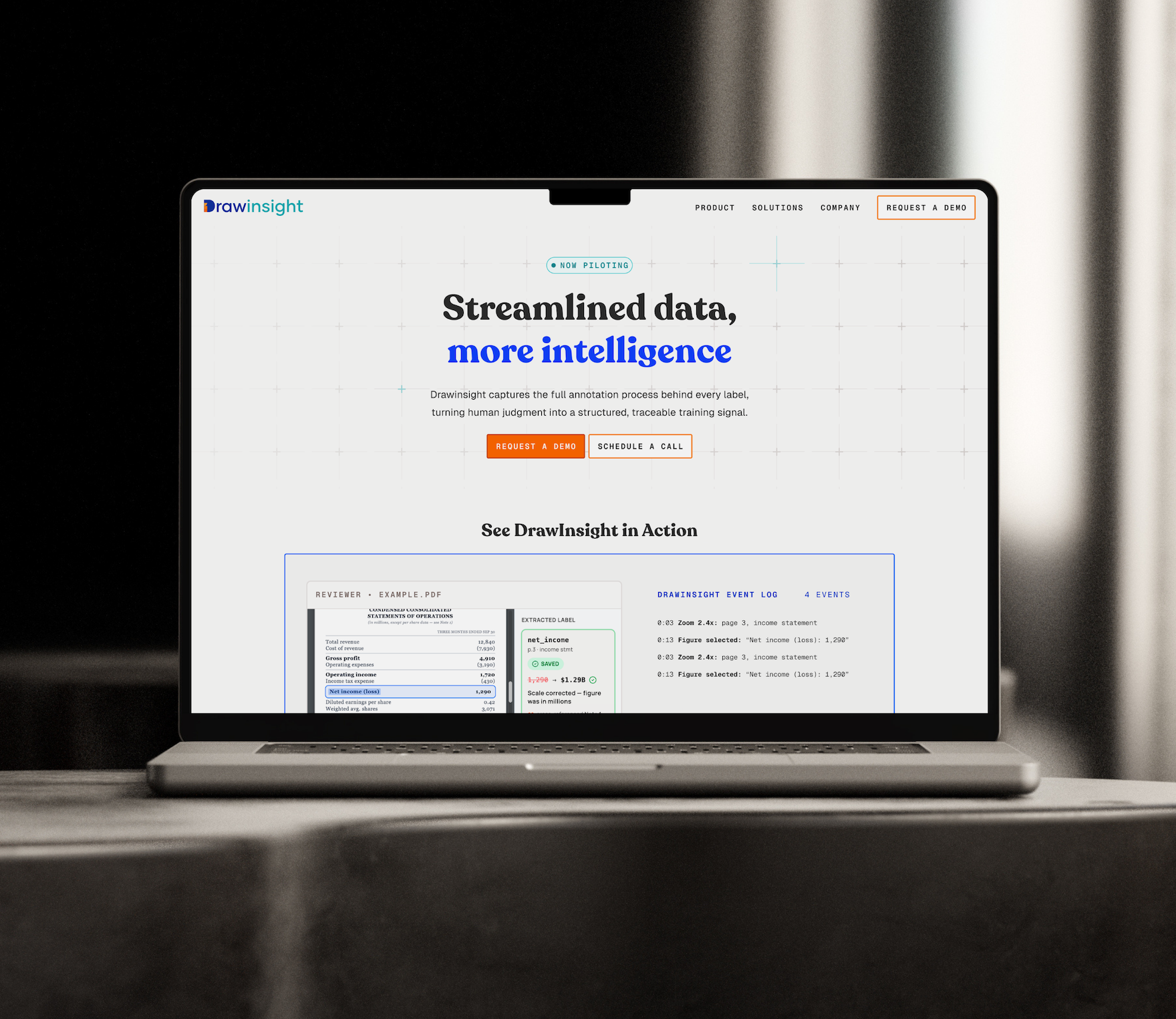
DrawInsight is an AI image annotation platform built on a novel approach to capturing and using annotators' work. The company's founder developed the idea directly from his PhD research, after seeing firsthand the limitations of existing annotation tools.
While the team was doing technically sophisticated work, they had a communication problem: they couldn't explain what made DrawInsight different to anyone outside their domain. The founder admitted he was embarrassed to send people to his own website, which was a real issue given their goal of signing three customers by the end of summer.
They brought in North & Form to translate a complex platform into messaging that would resonate with non-technical buyers, and build a brand system and website the team could maintain and extend themselves after we were done.
Kicking off with ideal customer and differentiation mapping
Kickoff Workshop
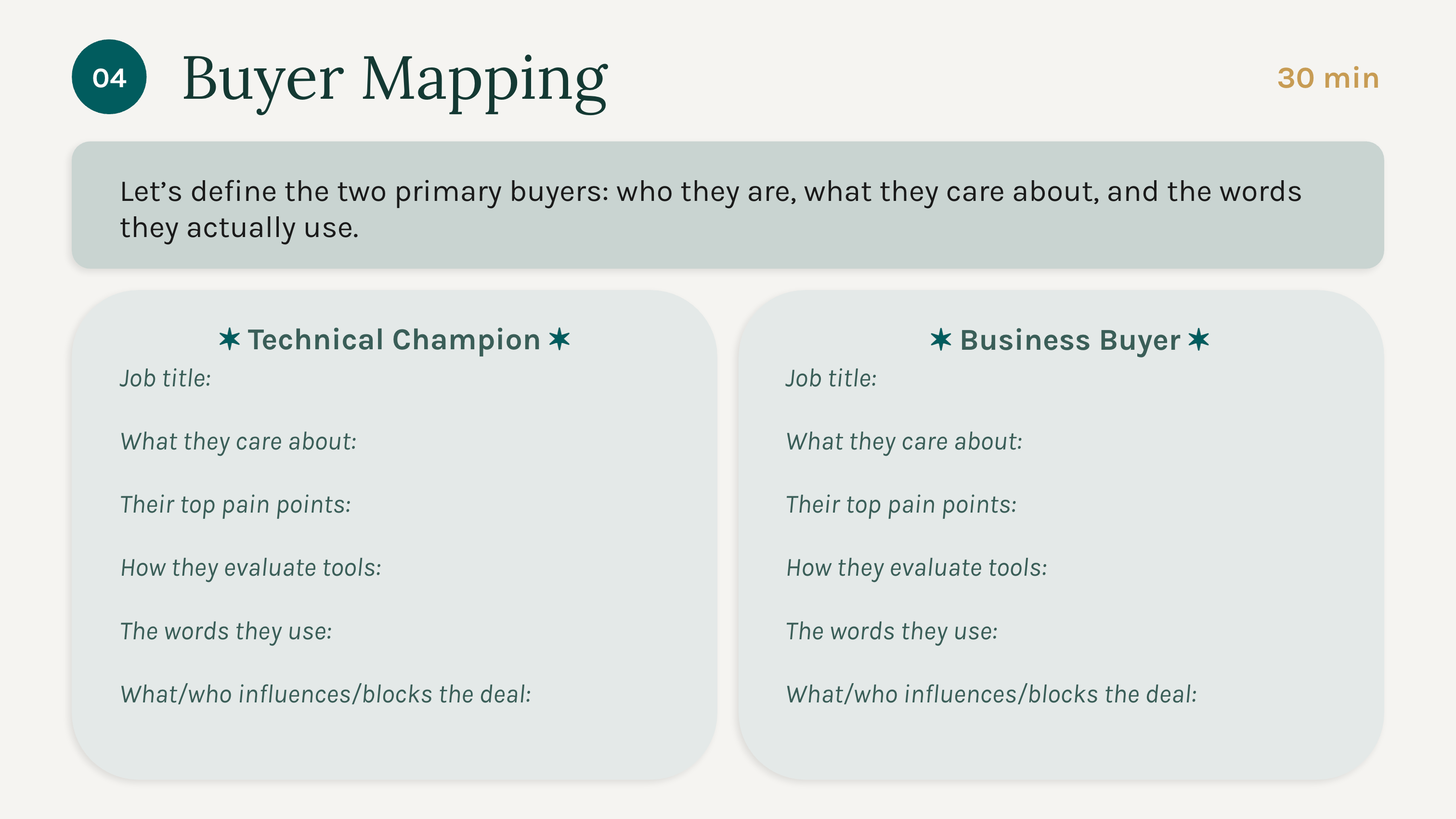
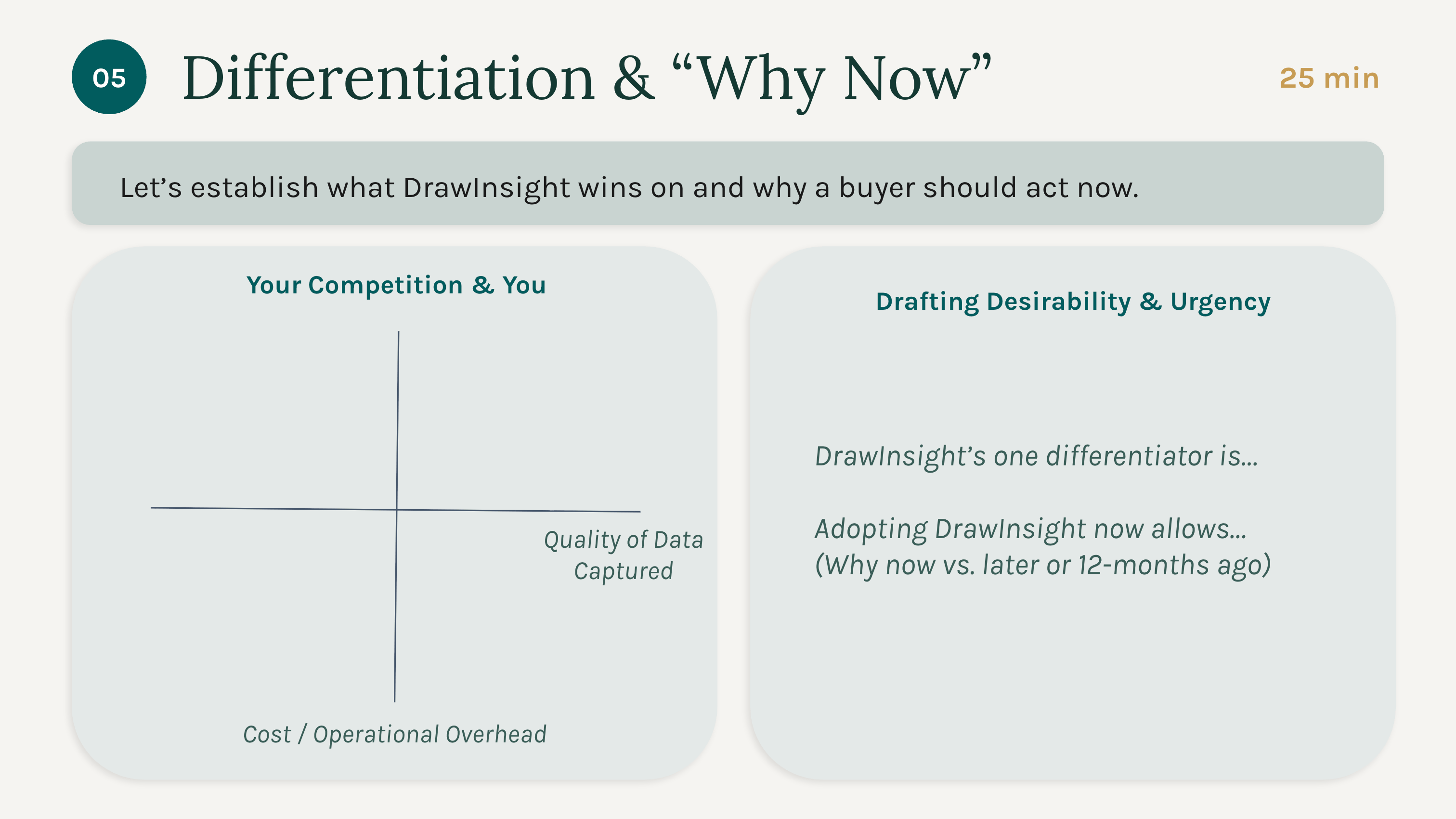
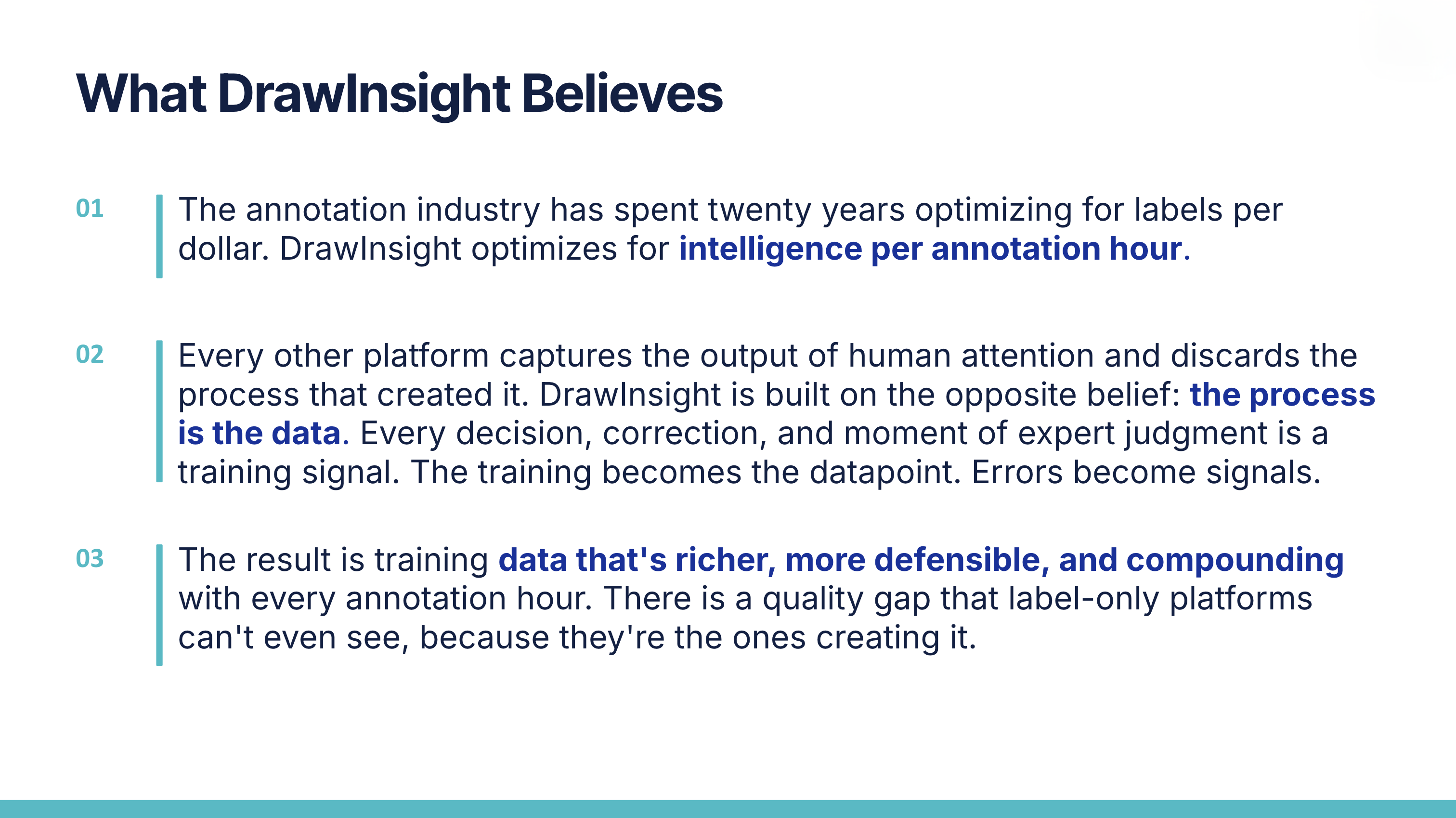
We started by spending a day with the DrawInsight team, mapping their ideal customer: mid-size companies with edge-case annotation needs that off-the-shelf models couldn't handle. The workshop revealed a few uncomfortable truths: competitors were further ahead in the market, better funded, and more polished. From that emerged the idea that carried the whole project: every competing platform captures the output of human attention and discards the process, while DrawInsight bets that the process itself is data.
Stakeholder Interviews
We pressure-tested that thesis with investors and stakeholders, and their interviews reframed the pitch more sharply than anything we'd generated internally. One put it simply: DrawInsight isn't just selling the car; it's selling the car and the driver. Together, those conversations pushed us toward the same fix: lead with quantified value, not a feature list.
Snippets from our Brand Narrative Framework
Finding the Voice
The founder cared about precision, and he was right to do so. But he was also the first to admit that the current site leaned entirely on the vocabulary of ML practitioners, alienating his target audience. He wanted the copy to remain technically accurate while becoming more accessible to the buyers who mattered most: people who needed to understand DrawInsight's value quickly, without a research background to lean on. That gave us a clear brief rather than a fight to win. We sat with him line by line, testing whether language that felt obvious to a founder still landed for a buyer scanning the site for ten seconds. We rewrote the same core ideas in half a dozen ways before landing on something specific enough to feel credible to an expert and plain enough for any buyer to see what it meant for their own domain.
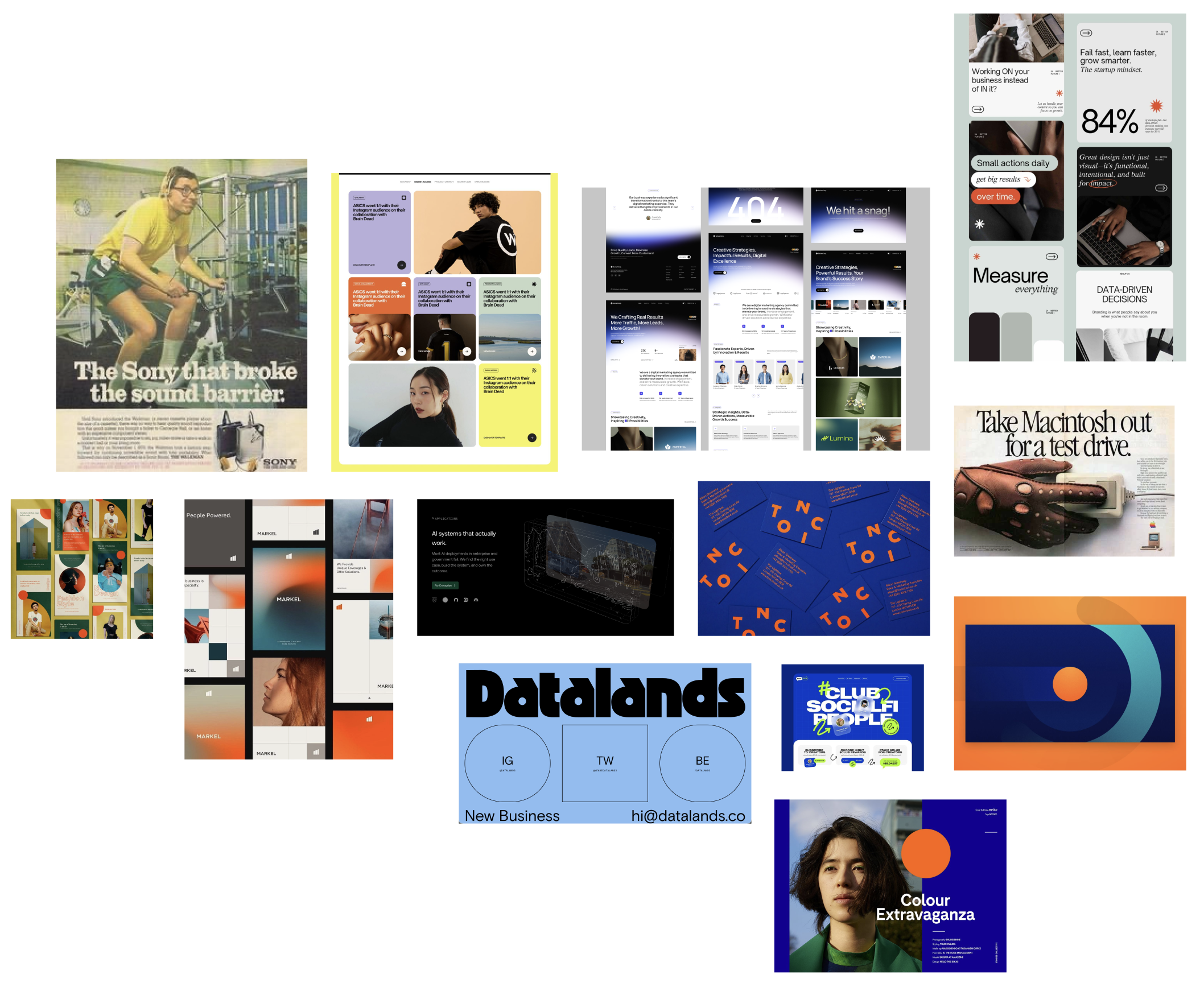
Design inspiration: blending vintage ads with the latest technology
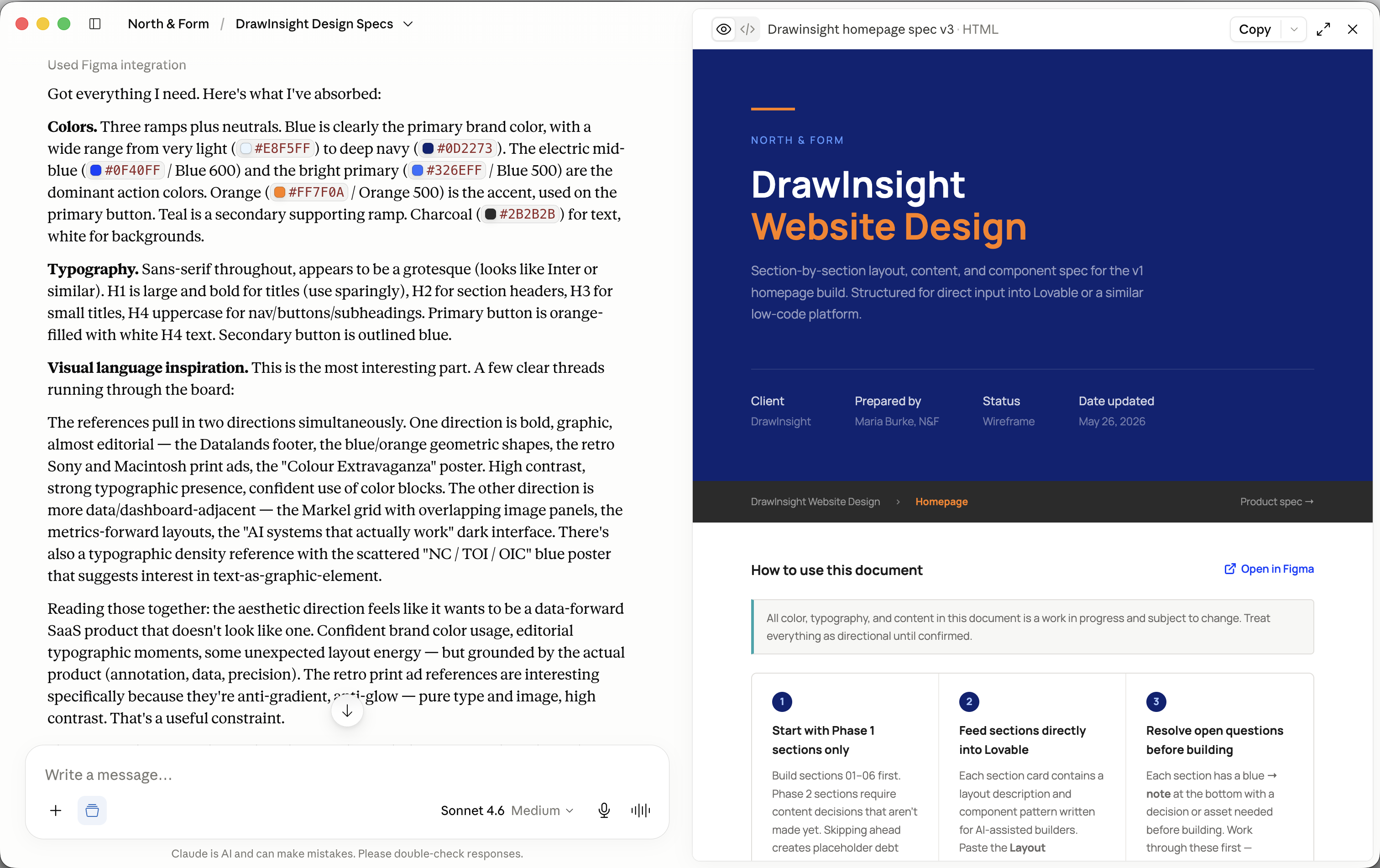
Using Claude to translate designs into specs that a low-code tool could use to build the website
The Design Process: Human Judgment + AI Leverage
Where the copy needed to soften, the visual design got to take a swing. We landed on a site personality that reads as retro yet technical, drawing on old 80s computer ads rather than copying current AI software trends. Getting there split cleanly along one line: taste and high-fidelity execution stayed human; structure and translation got AI leverage. We used AI tools to build early wireframes, define page structure, and generate diagrams, but every high-fidelity design decision was made by (expert) hand.
The real win came at the handoff layer. We used Claude Design to translate that hand-built visual language into a scalable, future-proof (read: AI-readable) design system that the team could use moving forward. On a timeline and budget scaled to an early-stage startup, that was the difference that mattered: without AI in the process, we could have delivered a good-looking site or a system built to scale, but not both. The AI layer is what allowed us to hand the founder a kit with real fidelity, built to keep producing consistent, on-brand work long after we'd left the room, at a speed and depth an expedited engagement like this one couldn't have supported otherwise.
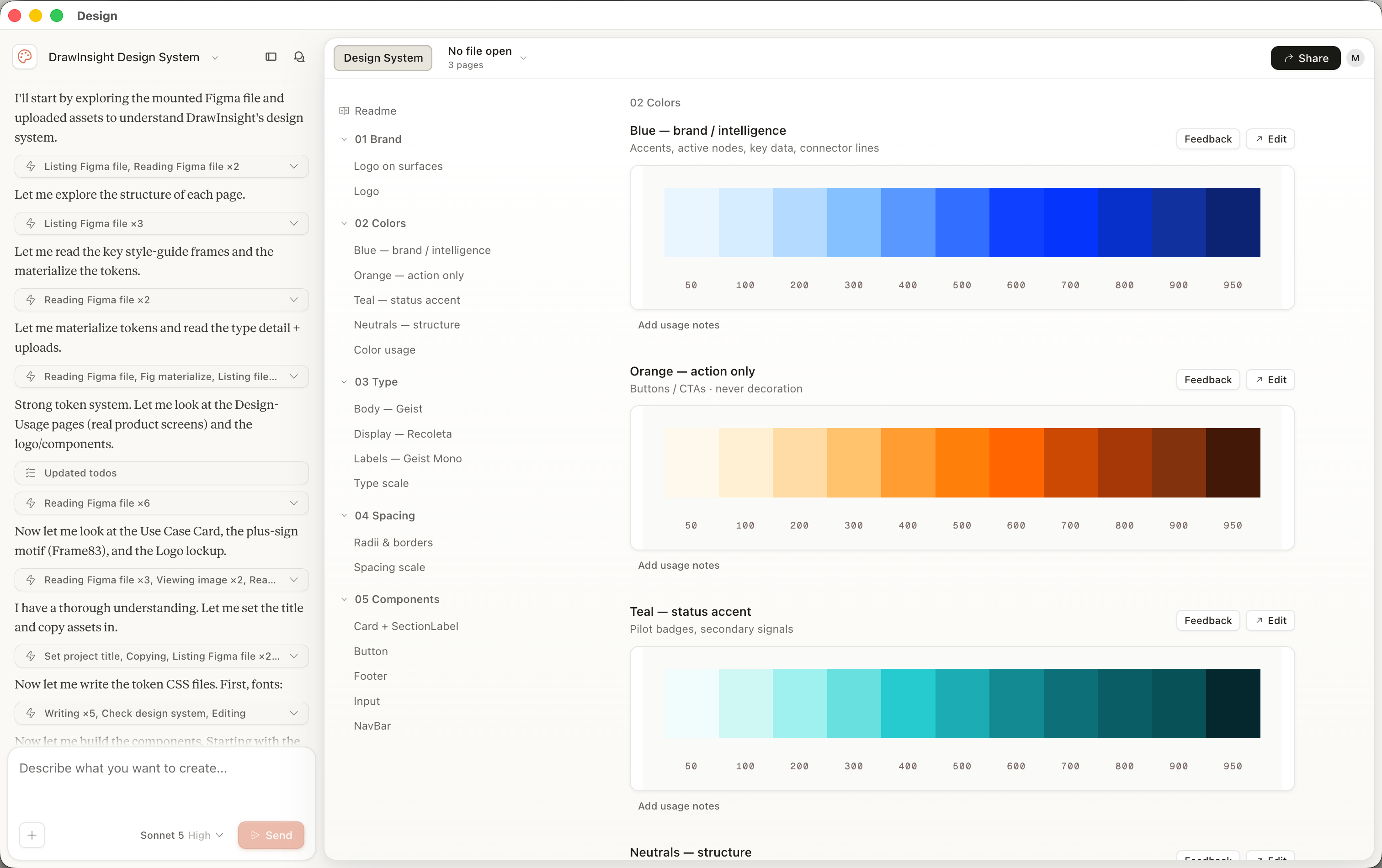
Claude-generated design system
Using Claude to create dev-ready animations
Handoff
That system, including a voice and tone guide, a design style guide, brand assets, and bespoke images showcasing the product's capabilities, was handed off with tactical instructions, not just documentation. The images mattered because the platform itself is still bare-bones in its MVP stage, actively being piloted with test clients, with its UI still catching up to everything the product can already do underneath. We built frameworks so AI tools could execute against them without hallucinating, protecting brand consistency for the founder and for any hires he brings on later. By final handoff, the messaging, brand system, and a templated site (homepage, product page, three industry-specific pages, a sales leave-behind, and a matching deck) had converged into something coherent and reusable. The founder looked through it and said it was everything he'd expected, and more.
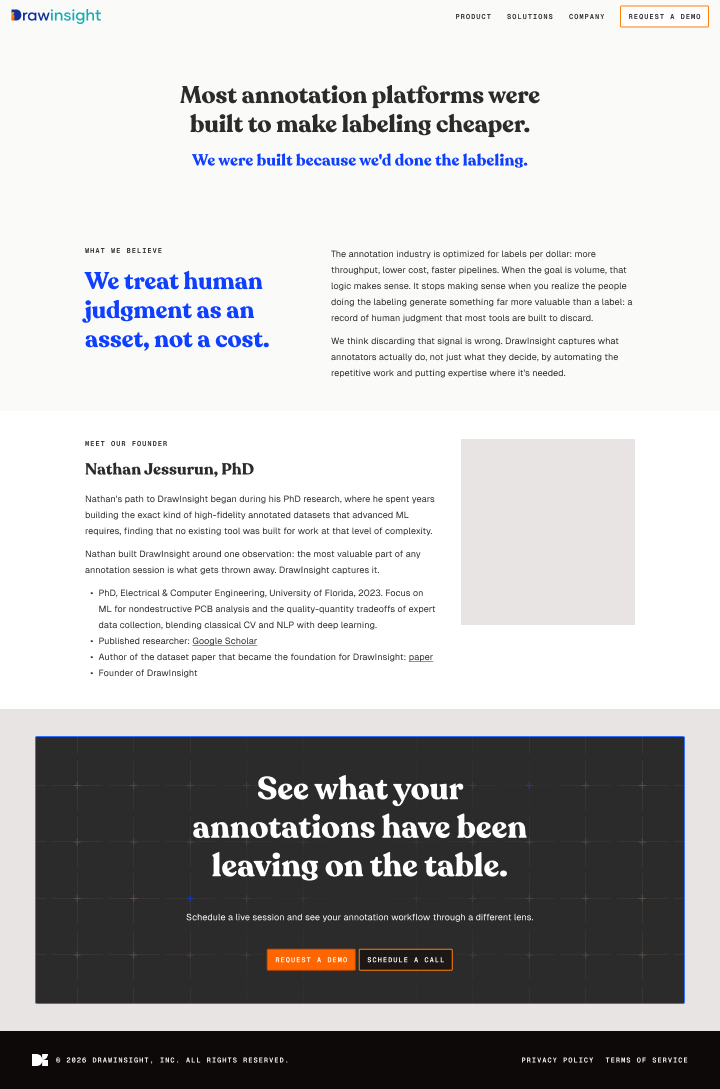
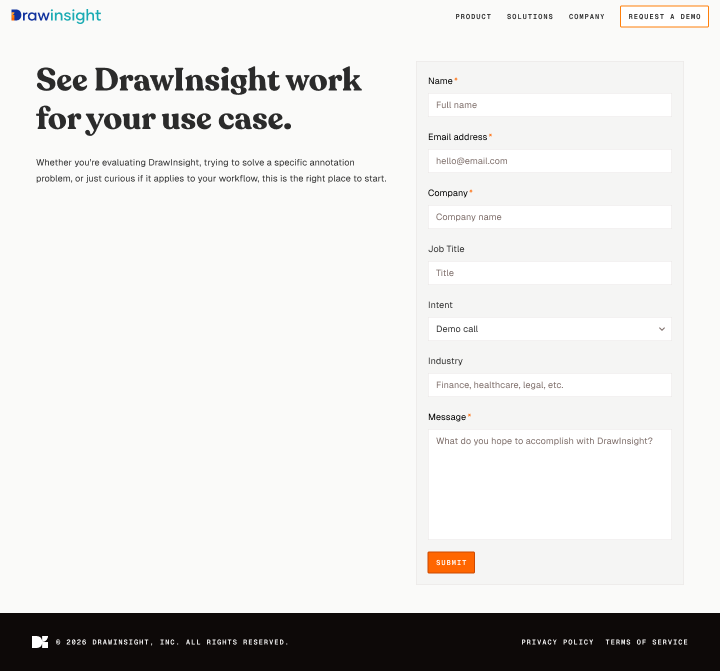
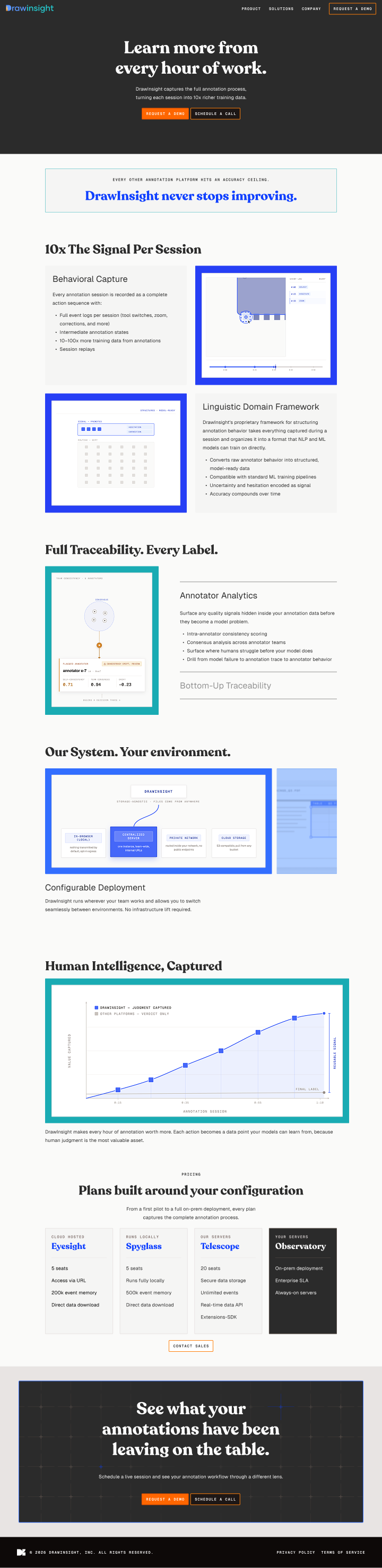
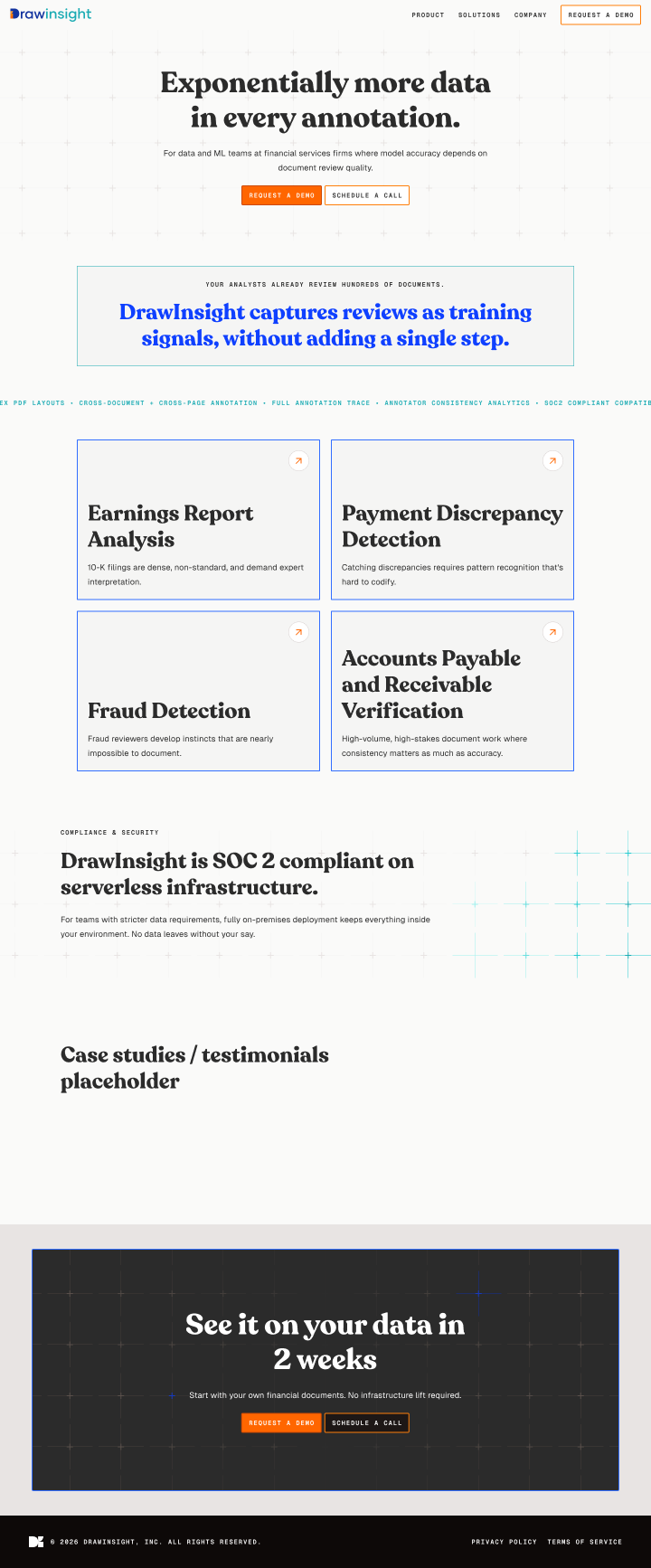
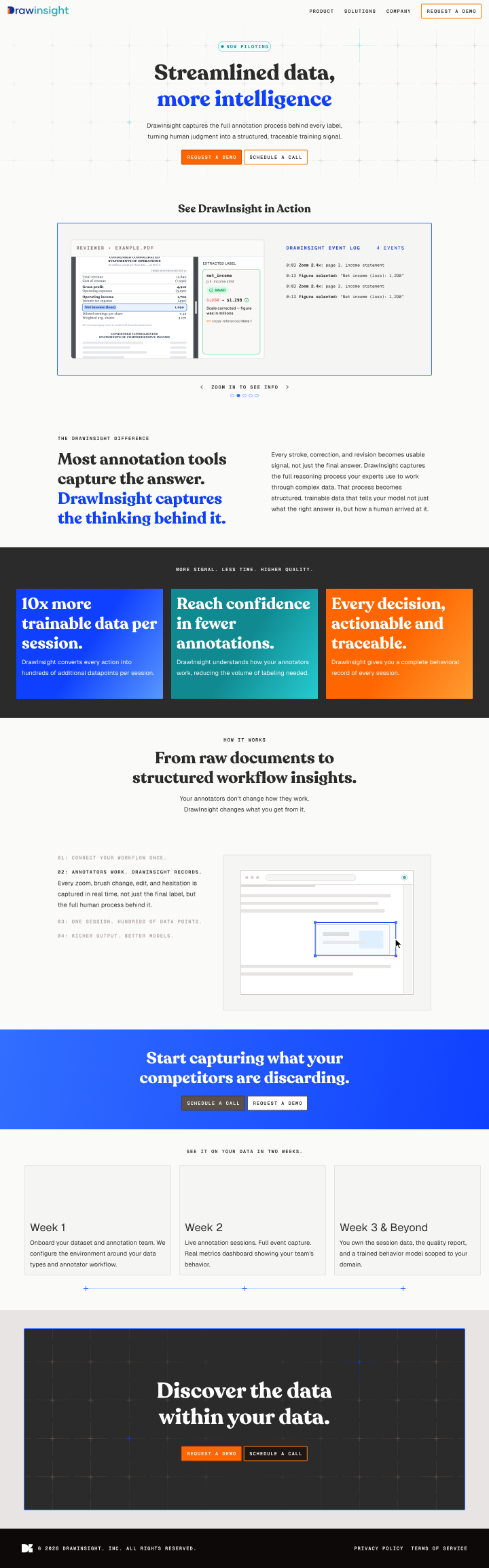
Final designs
Impact
Over six weeks, this engagement produced:
- One core positioning thesis that reframed the category (process-as-data vs. output-as-label)
- A hand-tuned brand and UX system, translated into a form AI tools can execute against directly, not just documentation
- Six pages of templated, launch-ready site copy and design, built to extend to new pages without a designer
- A level of design fidelity and scale that this timeline and budget couldn't have reached without AI in the process
What we left DrawInsight with wasn't a finished story so much as a working one: a clearer thesis, a system built to scale, and a founder equipped to keep telling it himself.
Need your story to land with buyers?
We help founders translate complex products into messaging and designs that actually convert.
book a discovery call

< prev
next >

Design & Messaging for an AI-Native Startup
Turning a complex product into a story any buyer can understand.
The Problem
DrawInsight is an AI image annotation platform built on a novel approach to capturing and using annotators' work. The company's founder developed the idea directly from his PhD research, after seeing firsthand the limitations of existing annotation tools.
While the team was doing technically sophisticated work, they had a communication problem: they couldn't explain what made DrawInsight different to anyone outside their domain. The founder admitted he was embarrassed to send people to his own website, which was a real issue given their goal of signing three customers by the end of summer.
They brought in North & Form to translate a complex platform into messaging that would resonate with non-technical buyers, and build a brand system and website the team could maintain and extend themselves after we were done.
Kicking off with ideal customer and differentiation mapping
Kickoff Workshop
We started by spending a day with the DrawInsight team, mapping their ideal customer: mid-size companies with edge-case annotation needs that off-the-shelf models couldn't handle. The workshop revealed a few uncomfortable truths: competitors were further ahead in the market, better funded, and more polished. From that emerged the idea that carried the whole project: every competing platform captures the output of human attention and discards the process, while DrawInsight bets that the process itself is data.
Stakeholder Interviews
We pressure-tested that thesis with investors and stakeholders, and their interviews reframed the pitch more sharply than anything we'd generated internally. One put it simply: DrawInsight isn't just selling the car; it's selling the car and the driver. Together, those conversations pushed us toward the same fix: lead with quantified value, not a feature list.
Snippets from our Brand Narrative Framework
Finding the Voice
The founder cared about precision, and he was right to do so. But he was also the first to admit that the current site leaned entirely on the vocabulary of ML practitioners, alienating his target audience. He wanted the copy to remain technically accurate while becoming more accessible to the buyers who mattered most: people who needed to understand DrawInsight's value quickly, without a research background to lean on. That gave us a clear brief rather than a fight to win. We sat with him line by line, testing whether language that felt obvious to a founder still landed for a buyer scanning the site for ten seconds. We rewrote the same core ideas in half a dozen ways before landing on something specific enough to feel credible to an expert and plain enough for any buyer to see what it meant for their own domain.
Design inspiration: blending vintage ads with the latest technology
Using Claude to translate designs into specs that a low-code tool could use to build the website
The Design Process: Human Judgment + AI Leverage
Where the copy needed to soften, the visual design got to take a swing. We landed on a site personality that reads as retro yet technical, drawing on old 80s computer ads rather than copying current AI software trends. Getting there split cleanly along one line: taste and high-fidelity execution stayed human; structure and translation got AI leverage. We used AI tools to build early wireframes, define page structure, and generate diagrams, but every high-fidelity design decision was made by (expert) hand.
The real win came at the handoff layer. We used Claude Design to translate that hand-built visual language into a scalable, future-proof (read: AI-readable) design system that the team could use moving forward. On a timeline and budget scaled to an early-stage startup, that was the difference that mattered: without AI in the process, we could have delivered a good-looking site or a system built to scale, but not both. The AI layer is what allowed us to hand the founder a kit with real fidelity, built to keep producing consistent, on-brand work long after we'd left the room, at a speed and depth an expedited engagement like this one couldn't have supported otherwise.
Claude-generated design system
Using Claude to create dev-ready animations
Handoff
That system, including a voice and tone guide, a design style guide, brand assets, and bespoke images showcasing the product's capabilities, was handed off with tactical instructions, not just documentation. The images mattered because the platform itself is still bare-bones in its MVP stage, actively being piloted with test clients, with its UI still catching up to everything the product can already do underneath. We built frameworks so AI tools could execute against them without hallucinating, protecting brand consistency for the founder and for any hires he brings on later. By final handoff, the messaging, brand system, and a templated site (homepage, product page, three industry-specific pages, a sales leave-behind, and a matching deck) had converged into something coherent and reusable. The founder looked through it and said it was everything he'd expected, and more.
Final designs
Impact
Over six weeks, this engagement produced:
- One core positioning thesis that reframed the category (process-as-data vs. output-as-label)
- A hand-tuned brand and UX system, translated into a form AI tools can execute against directly, not just documentation
- Six pages of templated, launch-ready site copy and design, built to extend to new pages without a designer
- A level of design fidelity and scale that this timeline and budget couldn't have reached without AI in the process
What we left DrawInsight with wasn't a finished story so much as a working one: a clearer thesis, a system built to scale, and a founder equipped to keep telling it himself.
Need your story to land with buyers?
We help founders translate complex products into messaging and designs that actually convert.
book a discovery call

< all projects
next project >
Design & Messaging for an AI-Native Startup
Turning a complex product into a story any buyer can understand.
The Problem
DrawInsight is an AI image annotation platform built on a novel approach to capturing and using annotators' work. The company's founder developed the idea directly from his PhD research, after seeing firsthand the limitations of existing annotation tools.
While the team was doing technically sophisticated work, they had a communication problem: they couldn't explain what made DrawInsight different to anyone outside their domain. The founder admitted he was embarrassed to send people to his own website, which was a real issue given their goal of signing three customers by the end of summer.
They brought in North & Form to translate a complex platform into messaging that would resonate with non-technical buyers, and build a brand system and website the team could maintain and extend themselves after we were done.
Kicking off with ideal customer and differentiation mapping
Kickoff Workshop
We started by spending a day with the DrawInsight team, mapping their ideal customer: mid-size companies with edge-case annotation needs that off-the-shelf models couldn't handle. The workshop revealed a few uncomfortable truths: competitors were further ahead in the market, better funded, and more polished. From that emerged the idea that carried the whole project: every competing platform captures the output of human attention and discards the process, while DrawInsight bets that the process itself is data.
Stakeholder Interviews
We pressure-tested that thesis with investors and stakeholders, and their interviews reframed the pitch more sharply than anything we'd generated internally. One put it simply: DrawInsight isn't just selling the car; it's selling the car and the driver. Together, those conversations pushed us toward the same fix: lead with quantified value, not a feature list.
Snippets from our Brand Narrative Framework
Finding the Voice
The founder cared about precision, and he was right to do so. But he was also the first to admit that the current site leaned entirely on the vocabulary of ML practitioners, alienating his target audience. He wanted the copy to remain technically accurate while becoming more accessible to the buyers who mattered most: people who needed to understand DrawInsight's value quickly, without a research background to lean on. That gave us a clear brief rather than a fight to win. We sat with him line by line, testing whether language that felt obvious to a founder still landed for a buyer scanning the site for ten seconds. We rewrote the same core ideas in half a dozen ways before landing on something specific enough to feel credible to an expert and plain enough for any buyer to see what it meant for their own domain.
Design inspiration: blending vintage ads with the latest technology
Using Claude to translate designs into specs that a low-code tool could use to build the website
The Design Process: Human Judgment + AI Leverage
Where the copy needed to soften, the visual design got to take a swing. We landed on a site personality that reads as retro yet technical, drawing on old 80s computer ads rather than copying current AI software trends. Getting there split cleanly along one line: taste and high-fidelity execution stayed human; structure and translation got AI leverage. We used AI tools to build early wireframes, define page structure, and generate diagrams, but every high-fidelity design decision was made by (expert) hand.
The real win came at the handoff layer. We used Claude Design to translate that hand-built visual language into a scalable, future-proof (read: AI-readable) design system that the team could use moving forward. On a timeline and budget scaled to an early-stage startup, that was the difference that mattered: without AI in the process, we could have delivered a good-looking site or a system built to scale, but not both. The AI layer is what allowed us to hand the founder a kit with real fidelity, built to keep producing consistent, on-brand work long after we'd left the room, at a speed and depth an expedited engagement like this one couldn't have supported otherwise.
Claude-generated design system
Using Claude to create dev-ready animations
Handoff
That system, including a voice and tone guide, a design style guide, brand assets, and bespoke images showcasing the product's capabilities, was handed off with tactical instructions, not just documentation. The images mattered because the platform itself is still bare-bones in its MVP stage, actively being piloted with test clients, with its UI still catching up to everything the product can already do underneath. We built frameworks so AI tools could execute against them without hallucinating, protecting brand consistency for the founder and for any hires he brings on later. By final handoff, the messaging, brand system, and a templated site (homepage, product page, three industry-specific pages, a sales leave-behind, and a matching deck) had converged into something coherent and reusable. The founder looked through it and said it was everything he'd expected, and more.
Final designs
Impact
Over six weeks, this engagement produced:
- One core positioning thesis that reframed the category (process-as-data vs. output-as-label)
- A hand-tuned brand and UX system, translated into a form AI tools can execute against directly, not just documentation
- Six pages of templated, launch-ready site copy and design, built to extend to new pages without a designer
- A level of design fidelity and scale that this timeline and budget couldn't have reached without AI in the process
What we left DrawInsight with wasn't a finished story so much as a working one: a clearer thesis, a system built to scale, and a founder equipped to keep telling it himself.
Need your story to land with buyers?
We help founders translate complex products into messaging and designs that actually convert.
book a discovery call
