
The Little Shift Lab Workshop
Turning limiting beliefs into testable experiments, in 90 minutes.
Background
We all carry stories about who we are. Some of them stop being useful long before we stop telling them. Those become limiting beliefs: "I'm bad at selling." "I'm not the kind of person who speaks up." Familiar, persistent, and almost always false.
The challenge isn't naming them. Most people can do that readily. The challenge is getting unstuck from them. The more entrenched a belief, the harder it is to see from the inside.
Gillian and I designed The Little Shift Lab for the CREA Conference in Sestri Levante, Italy: a 90-minute workshop built around one idea. Instead of fighting a limiting belief head-on, what if you used the energy you already have on your best days to reframe it?
The Design Challenge
Our first draft of the workshop design came out to over 2 hours when we timed everything out (we only had 90 minutes)
Getting the workshop time right wasn't just a logistics problem. Every section had to earn its place. We needed enough time for participants to actually access something real, not just go through the motions, and enough structure to keep things moving without losing the depth.
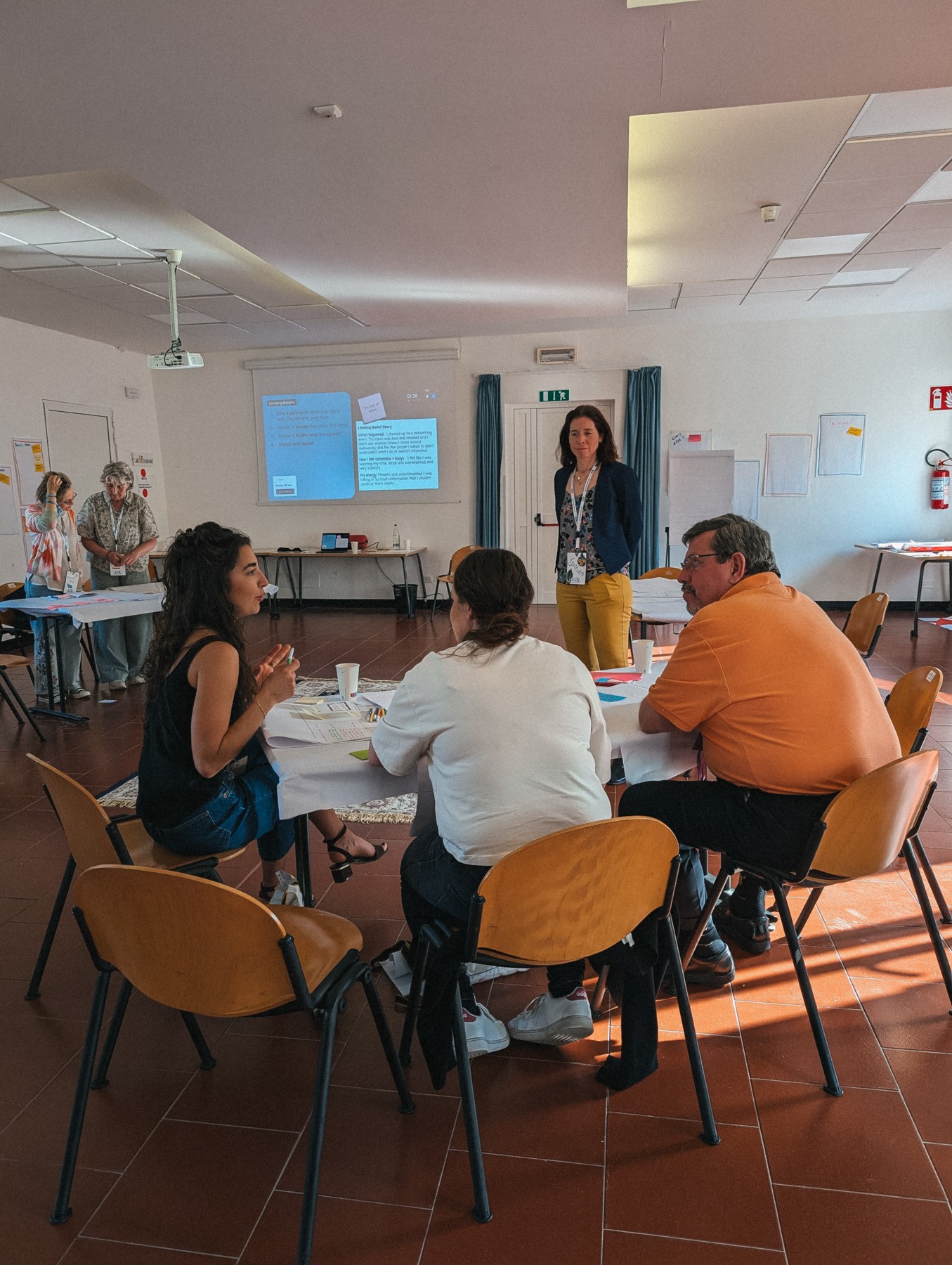
The bigger design challenge, though, was the ask we were making of participants. We were inviting complete strangers to share something personal and vulnerable, then immediately solicit advice from people they'd just met. The upside was real: a fresh outside perspective is often exactly what it takes to dislodge a belief you've been carrying for years. But so was the downside. Someone else's suggestions could easily fall flat, feel shallow, or miss the mark entirely. The whole experience could feel hollow.
We took care to design against that. The warm-up was structured to surface each person's strengths before asking them to share their struggles. The activities scaffolded from individual reflection to partner sharing to small group ideation, building familiarity and trust gradually. And the guidelines were explicit: be concrete, be specific, no fixing, no therapy. Just options and experiments.
The Process
The workshop moved through three phases.
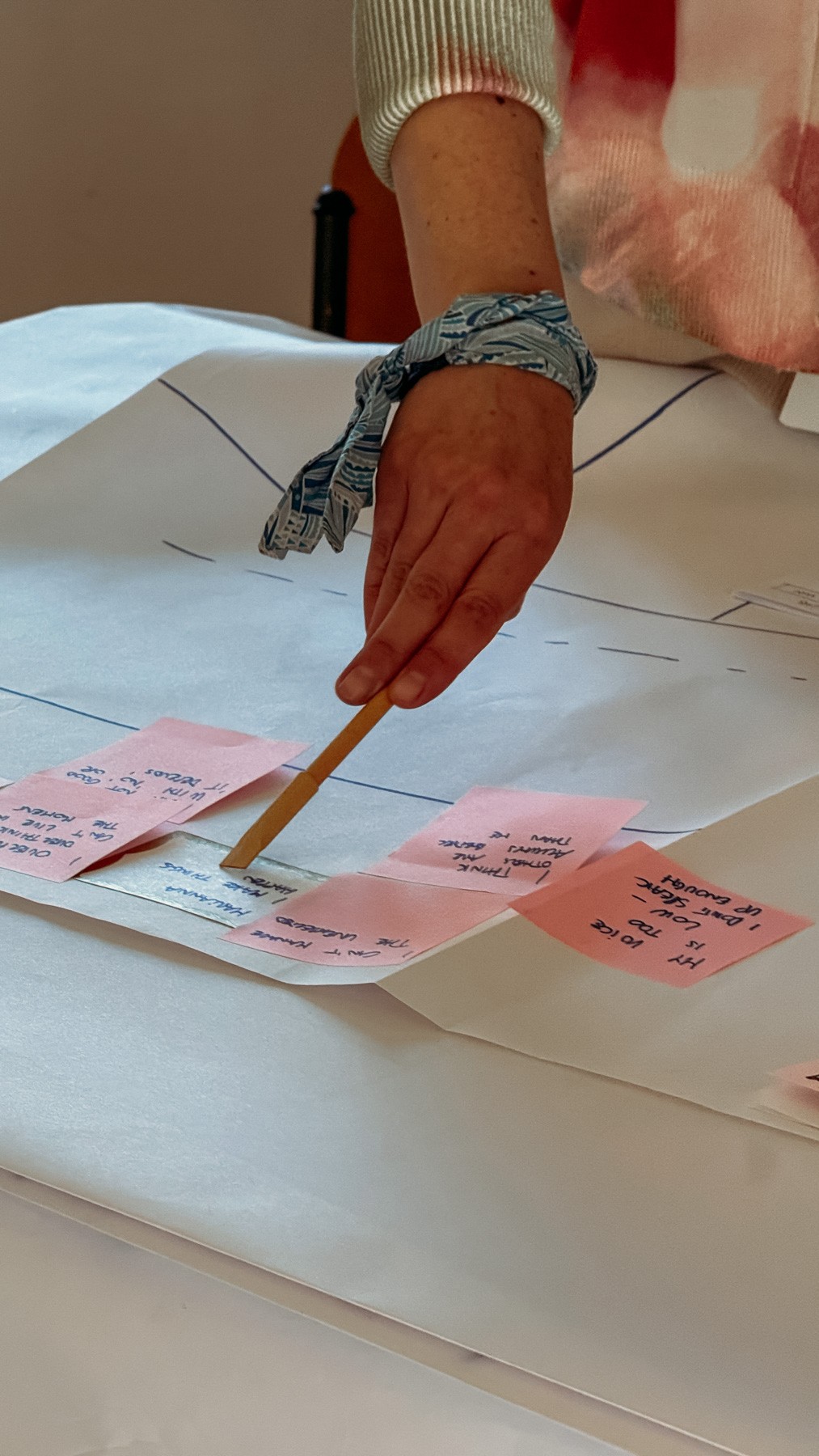
Limiting Beliefs. Participants named two or three limiting beliefs as short "I" statements, then chose one to work with. They mapped a specific moment when it had shown up: what happened, how they felt, what their energy was like. This became the raw material for everything that followed.
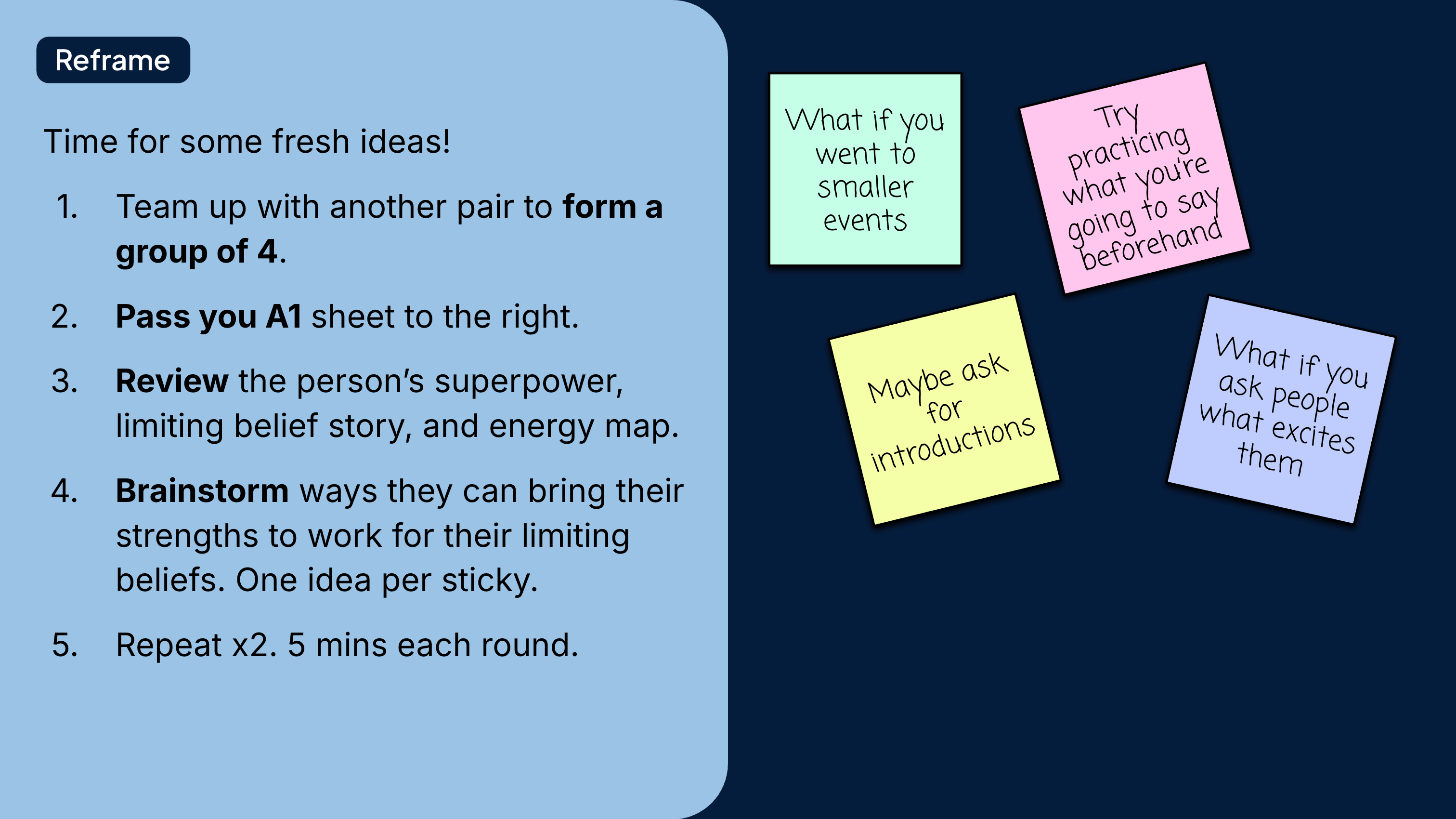
Reframe. Before trying to "fix" the belief, participants mapped their energy on a recent really good day: a moment when they felt capable, energized, like their best self. What happened, what strengths showed up, what made it work. Then, in a round robin, each person passed their materials to the right. The next person added ideas: how could the energy from that good day show up in the place where the limiting belief lives? Then they rotated. By the time materials came back around, each participant had a set of reframes generated by three different people, each with a different angle.
Experiment. Participants chose one idea, or combined a few, and turned it into a concrete micro-experiment to try in the next week. Not a vague intention: a specific hypothesis, a set of steps, and a resilience ritual for when things didn't go as planned.
The Workshop
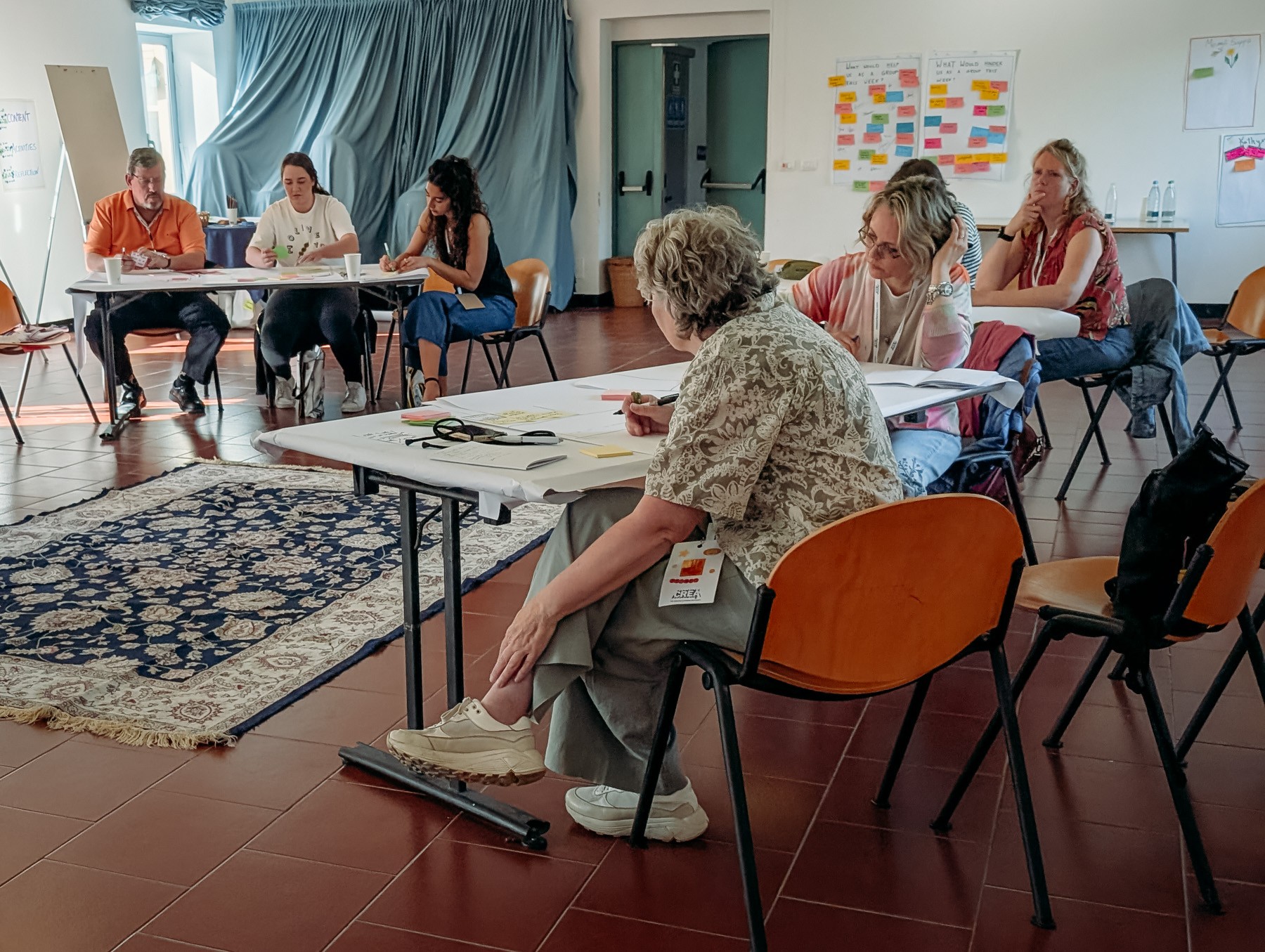
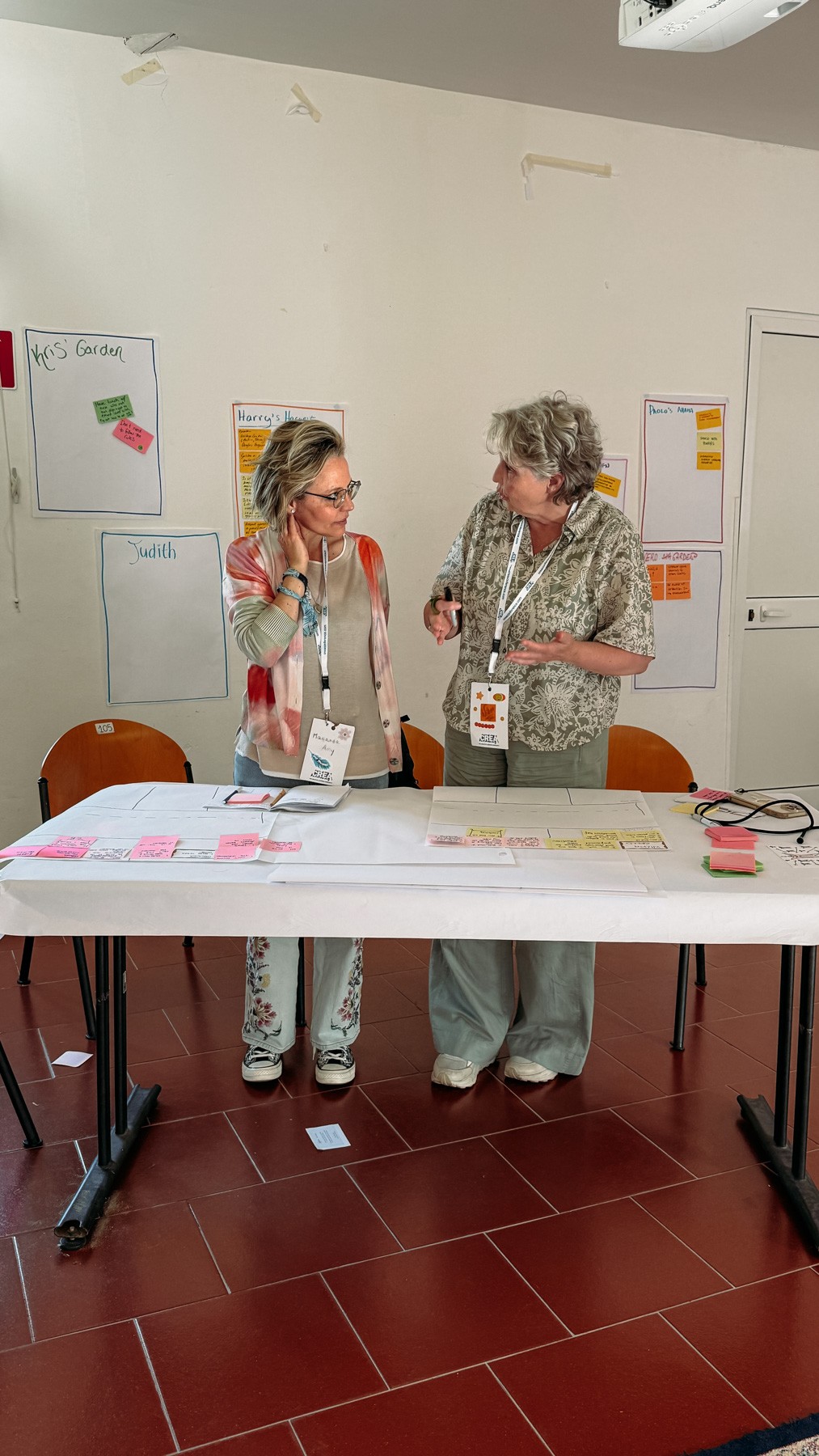
The session took place in April 2026 as part of the CREA Conference, a multi-day creativity and collaboration event held annually in Sestri Levante, Italy. Participants came from across Europe and the Americas, and were a mix of facilitators, designers, and creative professionals.
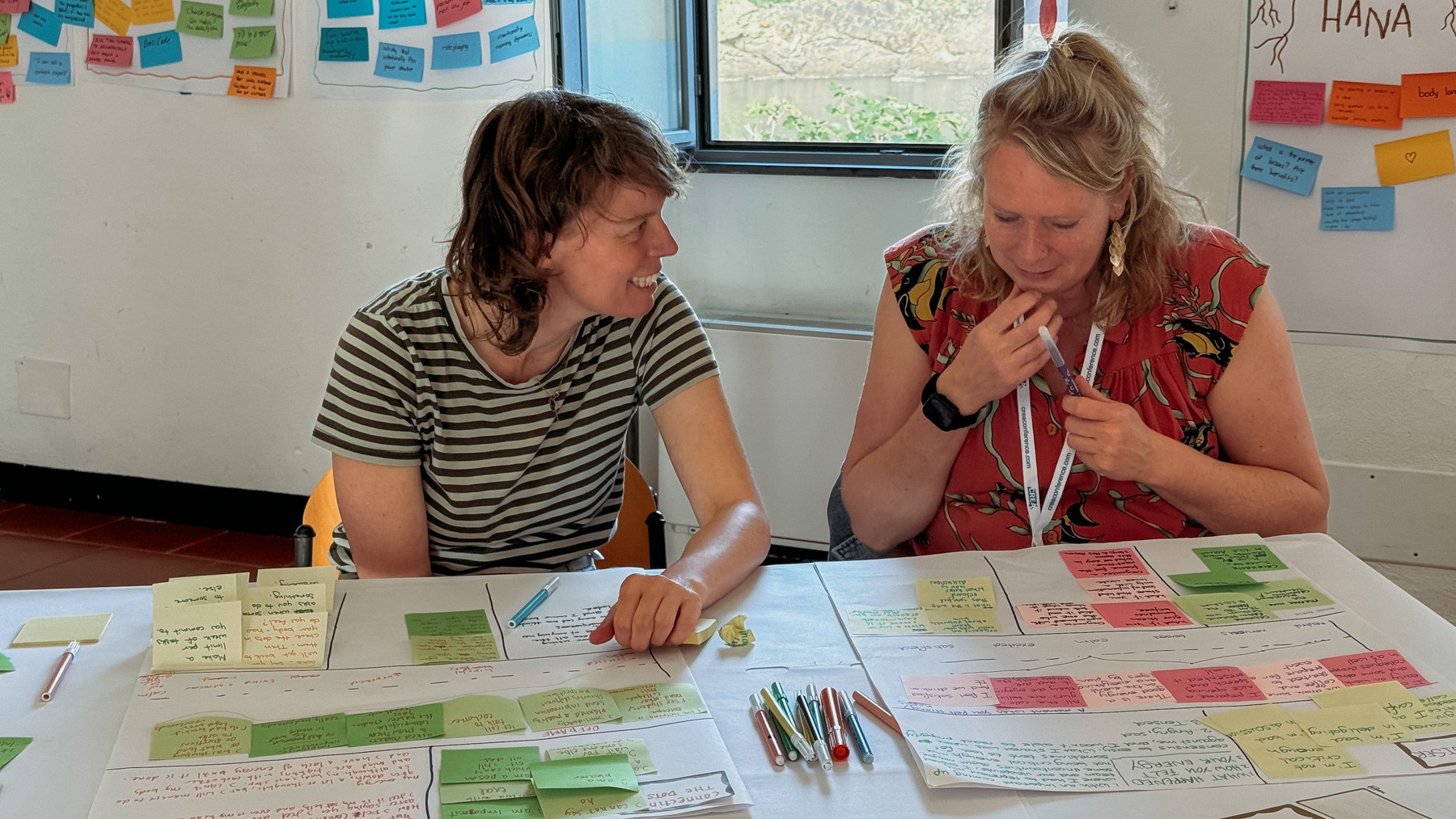
The room was focused in a way that surprised us. The activities that we had worried might feel too exposing, sharing vulnerable beliefs with strangers, generated some of the most honest and generative conversations we've seen in a workshop setting. People were specific with each other. They listened. The ideas they generated for one another were concrete and, more often than not, genuinely useful.
One participant, after receiving reframes from three different people, was moved to tears. Not because the ideas were dramatic. Because they were true. Because she felt, maybe for the first time in a long time, genuinely understood by people she had met an hour earlier.
At the close of the session, many participants asked for access to our slides, not to reference later, but to bring the process back to their own students and teams.
Impact
Every participant left with a concrete micro-experiment designed for a real, upcoming moment in their life, not a vague intention but a specific hypothesis, a set of steps, and a built-in resilience ritual.
The process was tight enough to take someone from a years-held limiting belief to a testable reframe in 90 minutes. And the signal we value most: participants who work in facilitation and education themselves wanted to teach it to others.
Looking to energize your team or community?
We design and facilitate workshops that help people get unstuck, think differently, and leave with something they can actually use.
book a discovery call

< all projects
next >

The Little Shift Lab Workshop
Turning limiting beliefs into testable experiments, in 90 minutes.
Background
We all carry stories about who we are. Some of them stop being useful long before we stop telling them. Those become limiting beliefs: "I'm bad at selling." "I'm not the kind of person who speaks up." Familiar, persistent, and almost always false.
The challenge isn't naming them. Most people can do that readily. The challenge is getting unstuck from them. The more entrenched a belief, the harder it is to see from the inside.
Gillian and I designed The Little Shift Lab for the CREA Conference in Sestri Levante, Italy: a 90-minute workshop built around one idea. Instead of fighting a limiting belief head-on, what if you used the energy you already have on your best days to reframe it?
The Design Challenge
Our first draft of the workshop design came out to over 2 hours when we timed everything out (we only had 90 minutes)
Getting the workshop time right wasn't just a logistics problem. Every section had to earn its place. We needed enough time for participants to actually access something real, not just go through the motions, and enough structure to keep things moving without losing the depth.
The bigger design challenge, though, was the ask we were making of participants. We were inviting complete strangers to share something personal and vulnerable, then immediately solicit advice from people they'd just met. The upside was real: a fresh outside perspective is often exactly what it takes to dislodge a belief you've been carrying for years. But so was the downside. Someone else's suggestions could easily fall flat, feel shallow, or miss the mark entirely. The whole experience could feel hollow.
We took care to design against that. The warm-up was structured to surface each person's strengths before asking them to share their struggles. The activities scaffolded from individual reflection to partner sharing to small group ideation, building familiarity and trust gradually. And the guidelines were explicit: be concrete, be specific, no fixing, no therapy. Just options and experiments.
The Process
The workshop moved through three phases.
Limiting Beliefs. Participants named two or three limiting beliefs as short "I" statements, then chose one to work with. They mapped a specific moment when it had shown up: what happened, how they felt, what their energy was like. This became the raw material for everything that followed.
Reframe. Before trying to "fix" the belief, participants mapped their energy on a recent really good day: a moment when they felt capable, energized, like their best self. What happened, what strengths showed up, what made it work. Then, in a round robin, each person passed their materials to the right. The next person added ideas: how could the energy from that good day show up in the place where the limiting belief lives? Then they rotated. By the time materials came back around, each participant had a set of reframes generated by three different people, each with a different angle.
Experiment. Participants chose one idea, or combined a few, and turned it into a concrete micro-experiment to try in the next week. Not a vague intention: a specific hypothesis, a set of steps, and a resilience ritual for when things didn't go as planned.
The Workshop
The session took place in April 2026 as part of the CREA Conference, a multi-day creativity and collaboration event held annually in Sestri Levante, Italy. Participants came from across Europe and the Americas, and were a mix of facilitators, designers, and creative professionals.
The room was focused in a way that surprised us. The activities that we had worried might feel too exposing, sharing vulnerable beliefs with strangers, generated some of the most honest and generative conversations we've seen in a workshop setting. People were specific with each other. They listened. The ideas they generated for one another were concrete and, more often than not, genuinely useful.
One participant, after receiving reframes from three different people, was moved to tears. Not because the ideas were dramatic. Because they were true. Because she felt, maybe for the first time in a long time, genuinely understood by people she had met an hour earlier.
At the close of the session, many participants asked for access to our slides, not to reference later, but to bring the process back to their own students and teams.
Impact
Every participant left with a concrete micro-experiment designed for a real, upcoming moment in their life, not a vague intention but a specific hypothesis, a set of steps, and a built-in resilience ritual.
The process was tight enough to take someone from a years-held limiting belief to a testable reframe in 90 minutes. And the signal we value most: participants who work in facilitation and education themselves wanted to teach it to others.
Looking to energize your team or community?
We design and facilitate workshops that help people get unstuck, think differently, and leave with something they can actually use.
book a discovery call

< all projects
next project >
The Little Shift Lab Workshop
Turning limiting beliefs into testable experiments, in 90 minutes.
Background
We all carry stories about who we are. Some of them stop being useful long before we stop telling them. Those become limiting beliefs: "I'm bad at selling." "I'm not the kind of person who speaks up." Familiar, persistent, and almost always false.
The challenge isn't naming them. Most people can do that readily. The challenge is getting unstuck from them. The more entrenched a belief, the harder it is to see from the inside.
Gillian and I designed The Little Shift Lab for the CREA Conference in Sestri Levante, Italy: a 90-minute workshop built around one idea. Instead of fighting a limiting belief head-on, what if you used the energy you already have on your best days to reframe it?
The Design Challenge
Our first draft of the workshop design came out to over 2 hours when we timed everything out (we only had 90 minutes)
Getting the workshop time right wasn't just a logistics problem. Every section had to earn its place. We needed enough time for participants to actually access something real, not just go through the motions, and enough structure to keep things moving without losing the depth.
The bigger design challenge, though, was the ask we were making of participants. We were inviting complete strangers to share something personal and vulnerable, then immediately solicit advice from people they'd just met. The upside was real: a fresh outside perspective is often exactly what it takes to dislodge a belief you've been carrying for years. But so was the downside. Someone else's suggestions could easily fall flat, feel shallow, or miss the mark entirely. The whole experience could feel hollow.
We took care to design against that. The warm-up was structured to surface each person's strengths before asking them to share their struggles. The activities scaffolded from individual reflection to partner sharing to small group ideation, building familiarity and trust gradually. And the guidelines were explicit: be concrete, be specific, no fixing, no therapy. Just options and experiments.
The Process
The workshop moved through three phases.
Limiting Beliefs. Participants named two or three limiting beliefs as short "I" statements, then chose one to work with. They mapped a specific moment when it had shown up: what happened, how they felt, what their energy was like. This became the raw material for everything that followed.
Reframe. Before trying to "fix" the belief, participants mapped their energy on a recent really good day: a moment when they felt capable, energized, like their best self. What happened, what strengths showed up, what made it work. Then, in a round robin, each person passed their materials to the right. The next person added ideas: how could the energy from that good day show up in the place where the limiting belief lives? Then they rotated. By the time materials came back around, each participant had a set of reframes generated by three different people, each with a different angle.
Experiment. Participants chose one idea, or combined a few, and turned it into a concrete micro-experiment to try in the next week. Not a vague intention: a specific hypothesis, a set of steps, and a resilience ritual for when things didn't go as planned.
The Workshop
The session took place in April 2026 as part of the CREA Conference, a multi-day creativity and collaboration event held annually in Sestri Levante, Italy. Participants came from across Europe and the Americas, and were a mix of facilitators, designers, and creative professionals.
The room was focused in a way that surprised us. The activities that we had worried might feel too exposing, sharing vulnerable beliefs with strangers, generated some of the most honest and generative conversations we've seen in a workshop setting. People were specific with each other. They listened. The ideas they generated for one another were concrete and, more often than not, genuinely useful.
One participant, after receiving reframes from three different people, was moved to tears. Not because the ideas were dramatic. Because they were true. Because she felt, maybe for the first time in a long time, genuinely understood by people she had met an hour earlier.
At the close of the session, many participants asked for access to our slides, not to reference later, but to bring the process back to their own students and teams.
Impact
Every participant left with a concrete micro-experiment designed for a real, upcoming moment in their life, not a vague intention but a specific hypothesis, a set of steps, and a built-in resilience ritual.
The process was tight enough to take someone from a years-held limiting belief to a testable reframe in 90 minutes. And the signal we value most: participants who work in facilitation and education themselves wanted to teach it to others.
Looking to energize your team or community?
We design and facilitate workshops that help people get unstuck, think differently, and leave with something they can actually use.
book a discovery call
