
U.S. Market Research for a Home Beverage Appliance
De-risking U.S. market entry with research-backed product decisions.
The Problem
An international home water appliance manufacturer had an established client base in the Chinese market, but wanted to launch a line of products into the US market. But before they could do that, they needed to understand what was important to US consumers when it came to water and filtration. Enter North & Form: US-based quantitative and qualitative research experts.
For this project we performed multiple rounds and methods of market research, in order to ensure we gave our client the best understanding of the market to ensure their success.
Kickoff Workshop
We kicked the project off with a 1.5 day in-person workshop in Austin, TX. By the end of two days, we had a list of target market segments, a focused set of research themes, and a shared definition of success for the project.
As a few members of the client company did not speak fluent English, we utilized Miro and in-person translators to overcome the language barrier.
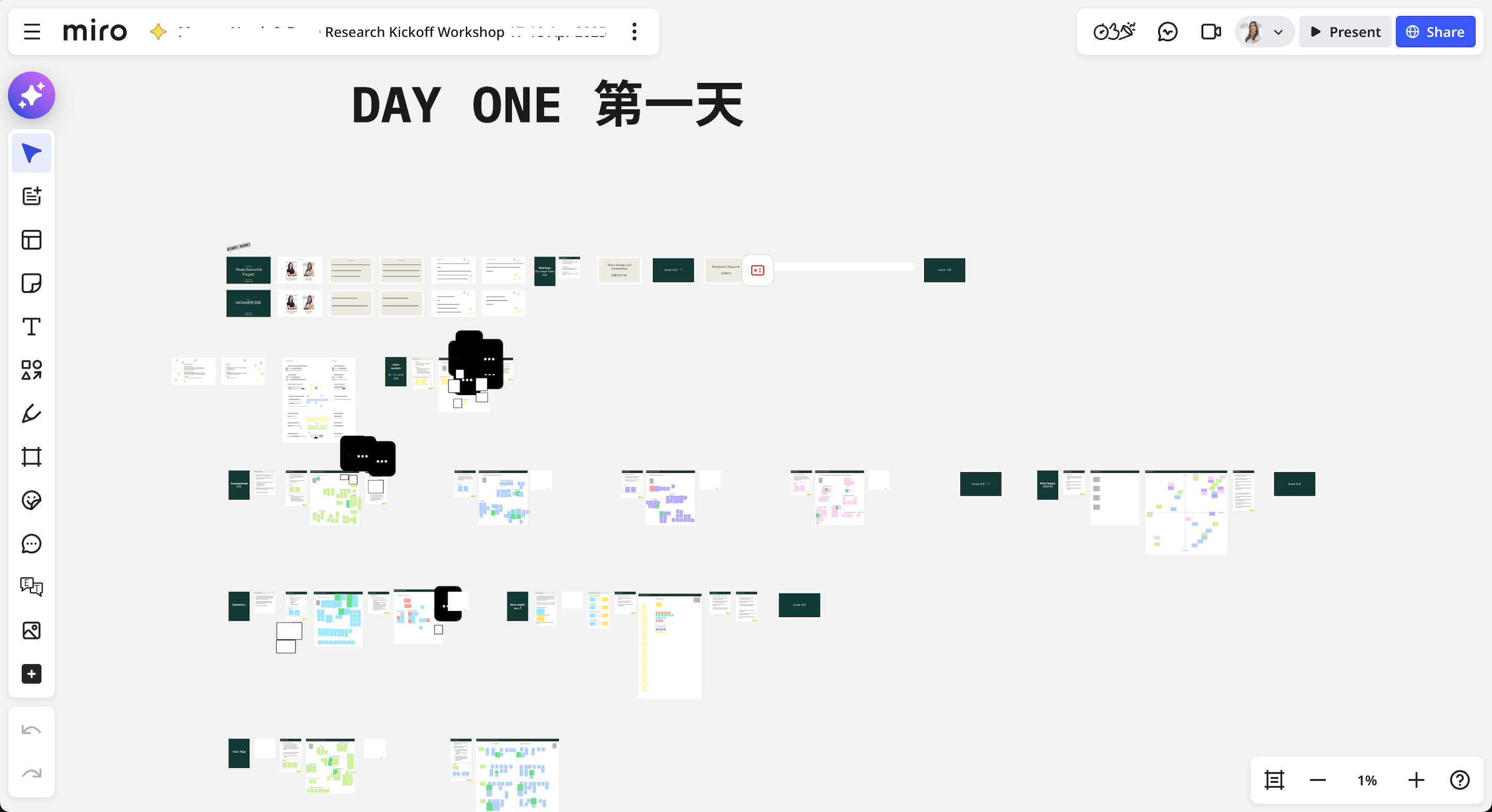
Miro board from our kickoff workshop
Quantitative Survey
We ran a nationwide online survey (600+ respondents) to quantify beverage and water routines at scale, validate early hypotheses, and identify which questions needed deeper qualitative follow-up.
what we measured
- Current behaviors and routines (not just stated preferences)
- Trust signals and decision drivers (what builds confidence, what creates doubt)
- Friction points and tradeoffs (convenience, maintenance, space, cost)
- Feature interest mapped to context (when a feature matters, for whom, and why)
- Segment indicators to recruit for later phases
how we used it
Survey results informed recruiting criteria for the diary study and in-home visits and helped us prioritize which themes were most important to explore qualitatively.
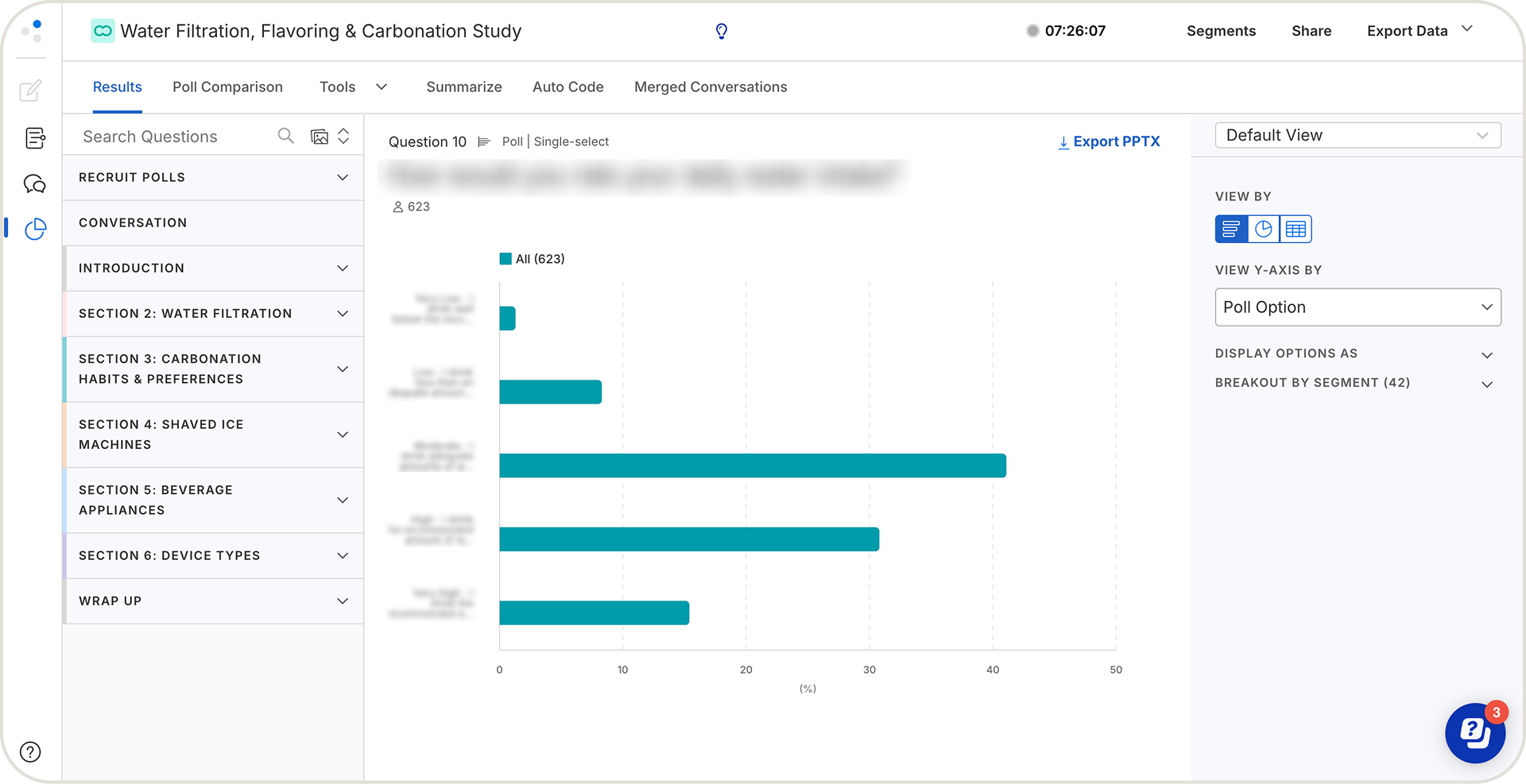
Overview of results from the 600+ participant quantitative survey.
Diary Study
Our multi-day diary study helped us understand real beverage behavior in context, not just what people say they do. It let us capture routines over time, spot friction as it happened, and collect lightweight artifacts we could probe on during in-home visits.
how it worked
Participants completed short daily entries designed to be easy to sustain while still producing decision-useful detail. Entries captured both behavior and confidence, so we could see where habits were stable and where uncertainty showed up.
how we used it
- Identified which moments in the day were most “make or break” for an at-home solution
- Refined interview prompts and observation goals for the ethnographic phase
- Improved recruiting balance by ensuring we covered a range of routines, setups, and constraints
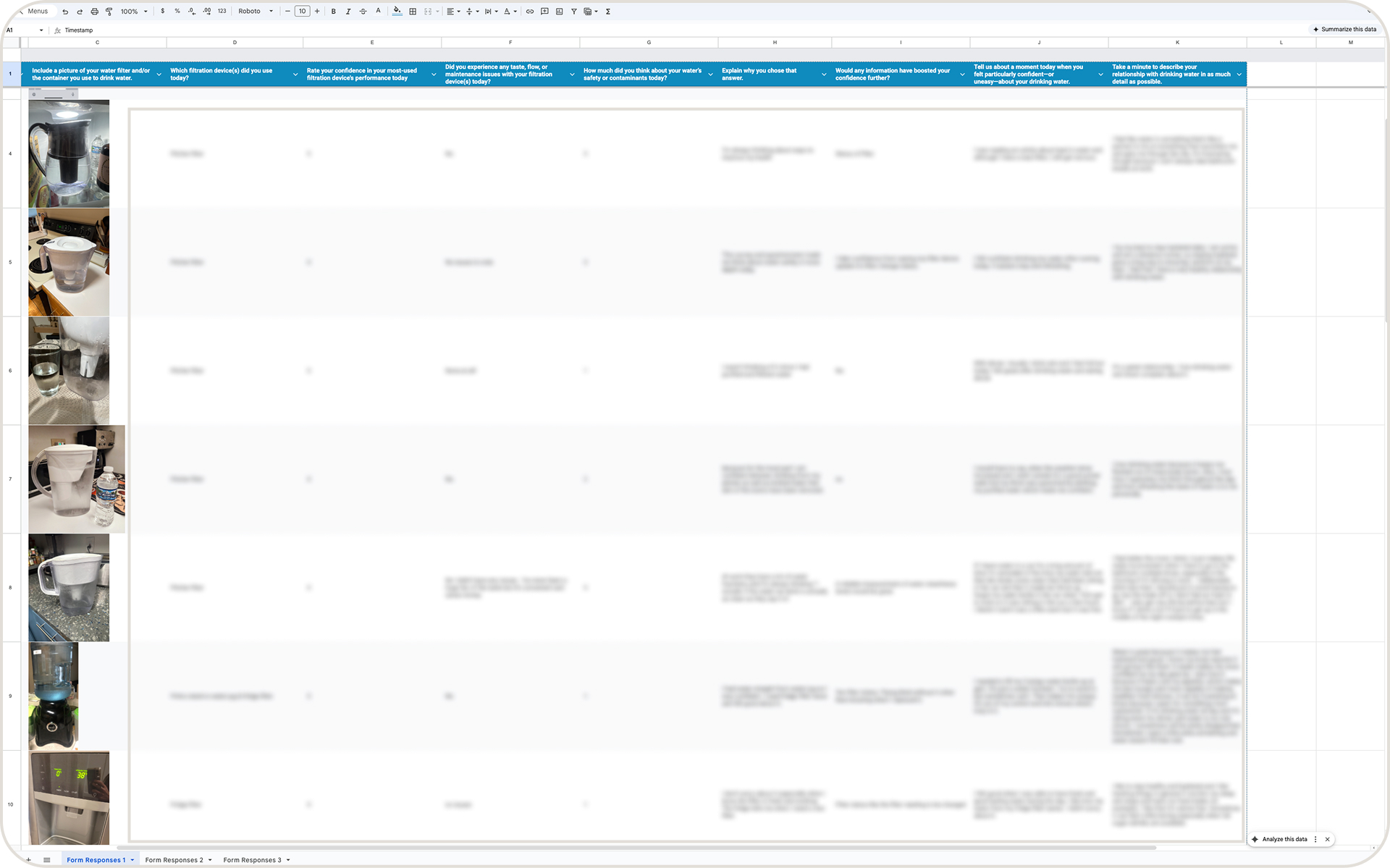
Participant entries from the week-long diary study
Ethnographic Research
To complement self-reported data with real-world observation, we conducted in-home ethnographic research with 30 U.S. households across every major US region. This phase focused on seeing actual setups, constraints, and decision-making in context so the team could design around reality, not assumptions.
What we did in-home
Each visit followed a consistent structure, with room to follow interesting threads:
- Context interview to understand household routines, constraints, and priorities
- Environment walkthrough to document physical setup, storage, and friction in the space
- Behavioral observation of how people actually get water and beverages throughout the day
- Guided activities such as building an ideal appliance and mood board creation to clarify tradeoffs and language
- Capture of artifacts (photos and notes on containers, filters, reminders, and workarounds) to inform design requirements
how we used it
- Validated which patterns from the survey and diary study held up in real life
- Clarified where friction was caused by the product versus the environment and routine
- Translated observations into concrete design inputs, including constraints, opportunity areas, and questions to test next
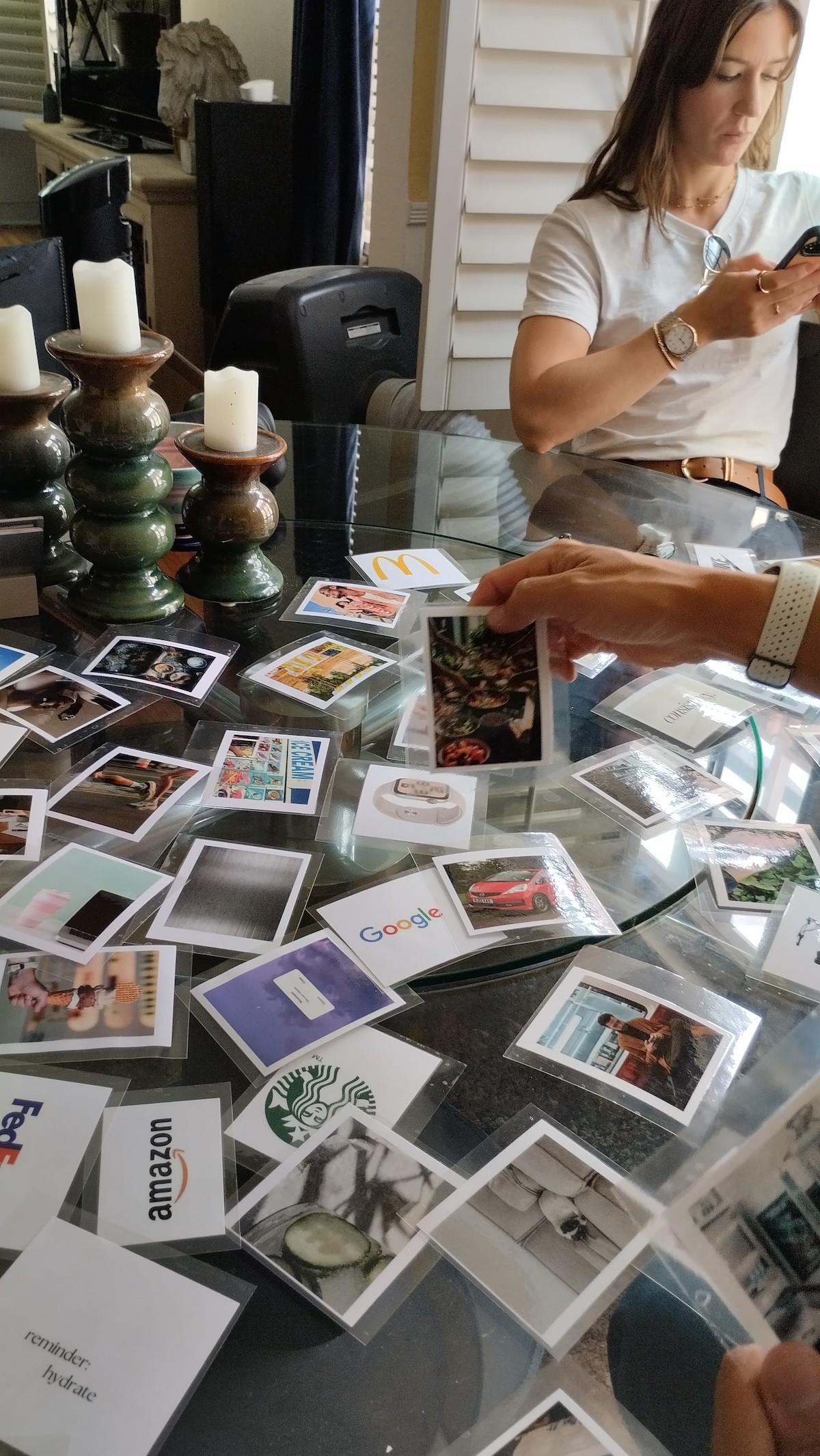
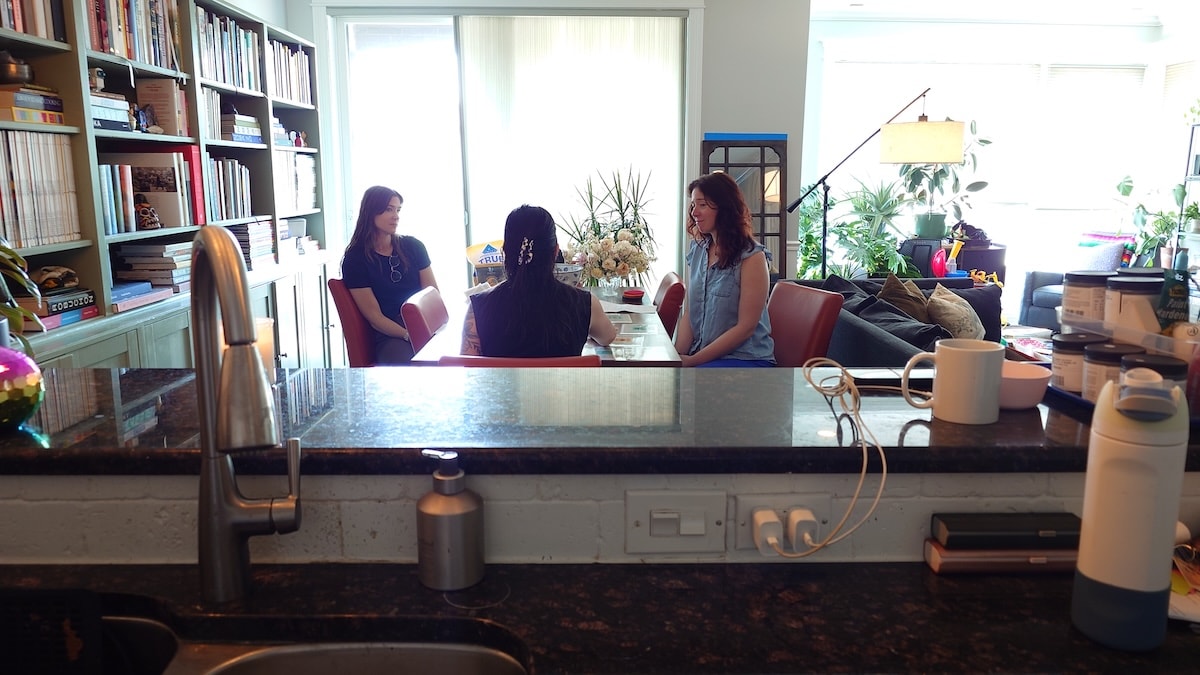
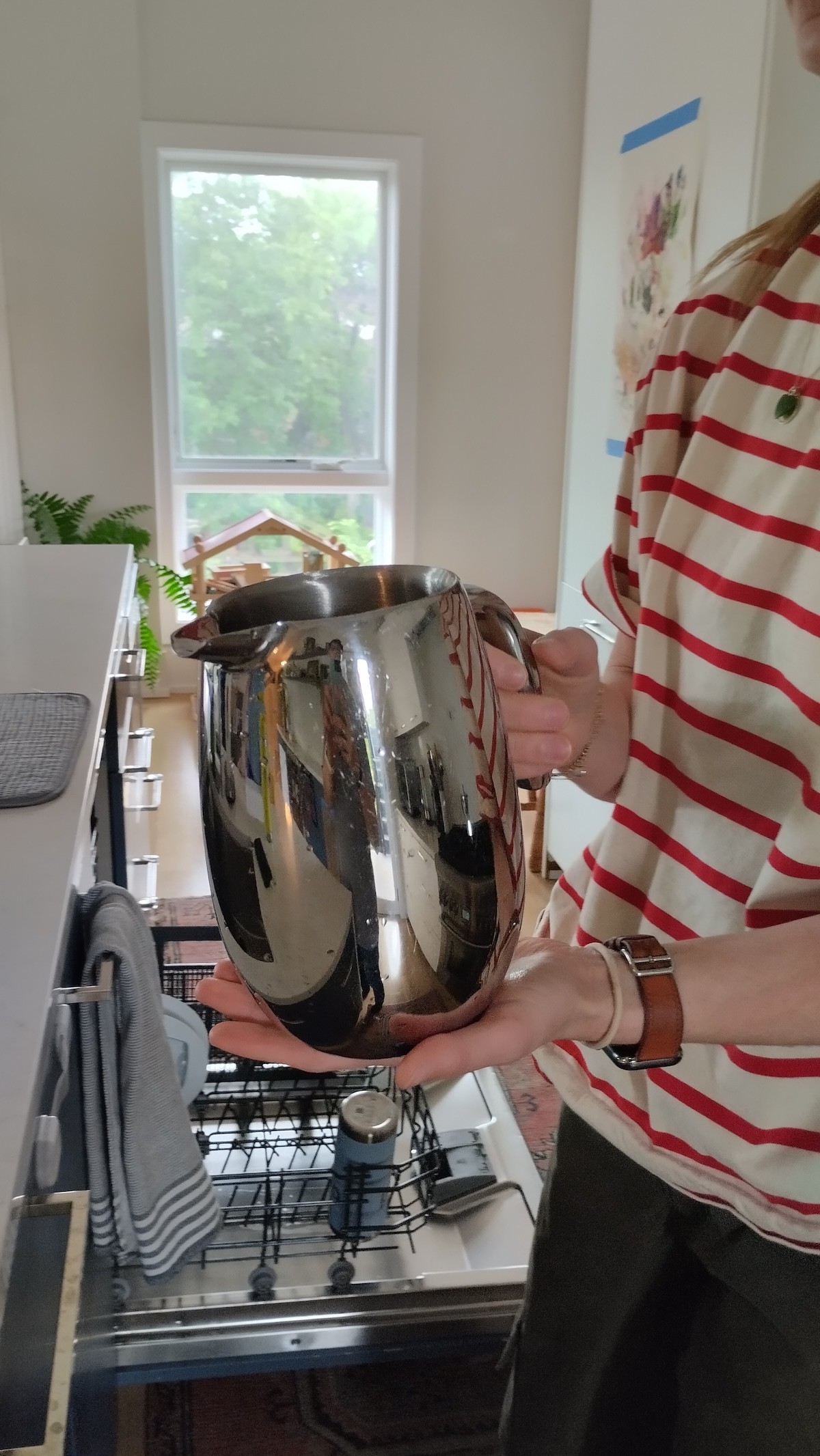
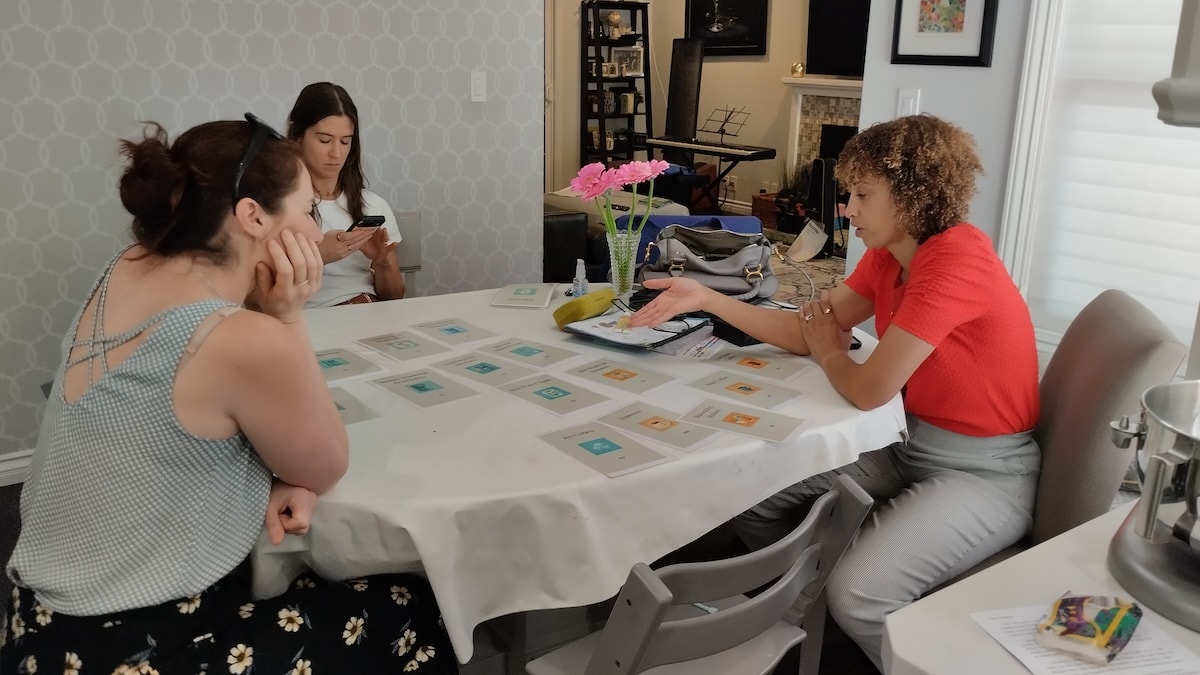
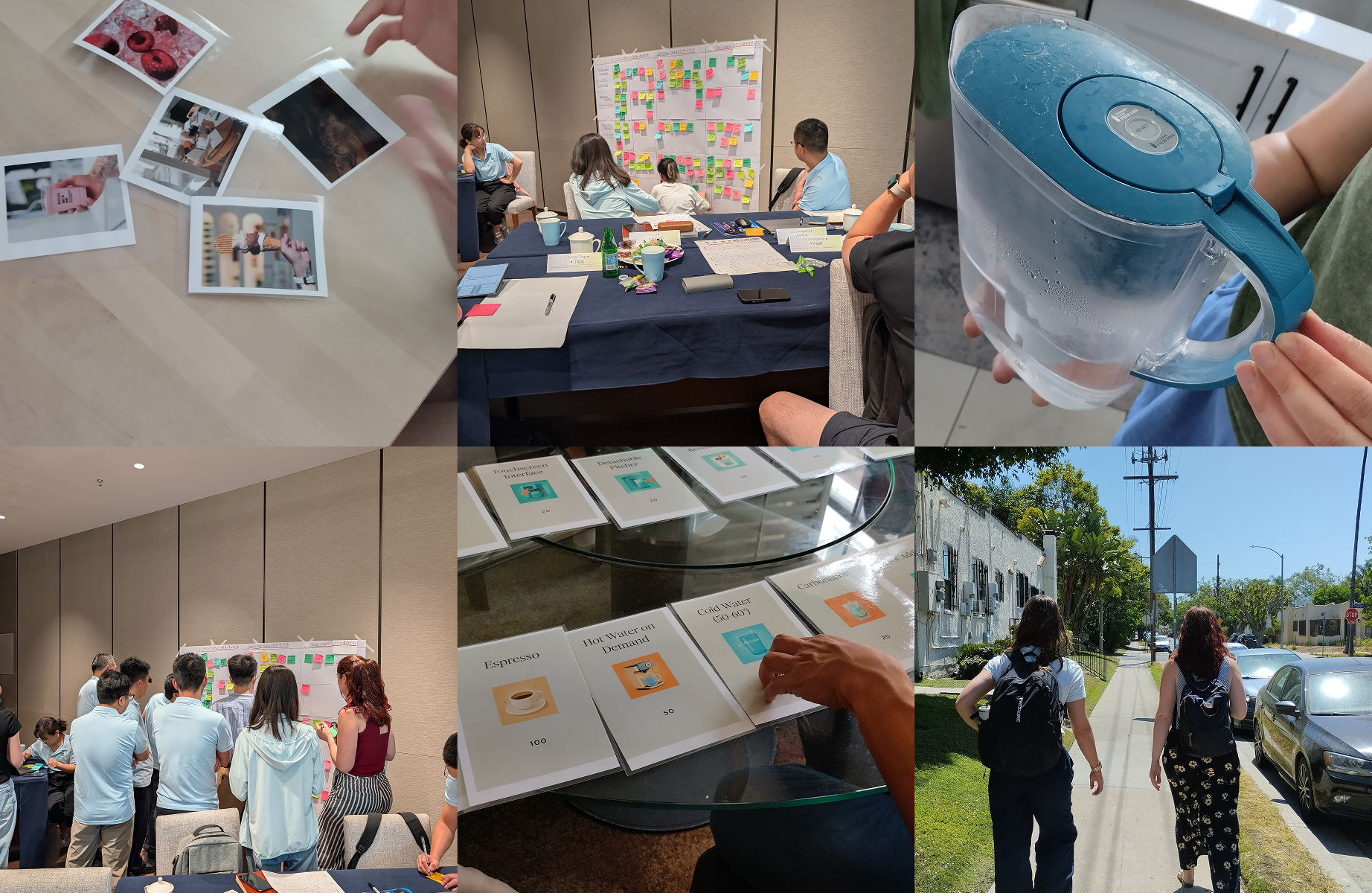
Snapshots from in-home nationwide ethnographic research
Innovation Workshop
After 4 months of research—including a 600-person quantitative study, a week-long diary study, and in-home research with 30 US households, the North & Form team traveled to China for an in-person innovation workshop with the client’s team.
The goals of this bilingual workshop at the client’s headquarters were to share the research findings and to brainstorm ideas for an innovative product the client could take to market.
By the end of 3 days, we had a feature set for the client’s first product to market in the US, concept sketches for their engineers to test and iterate on, and clear questions and assumptions to validate while moving forward.
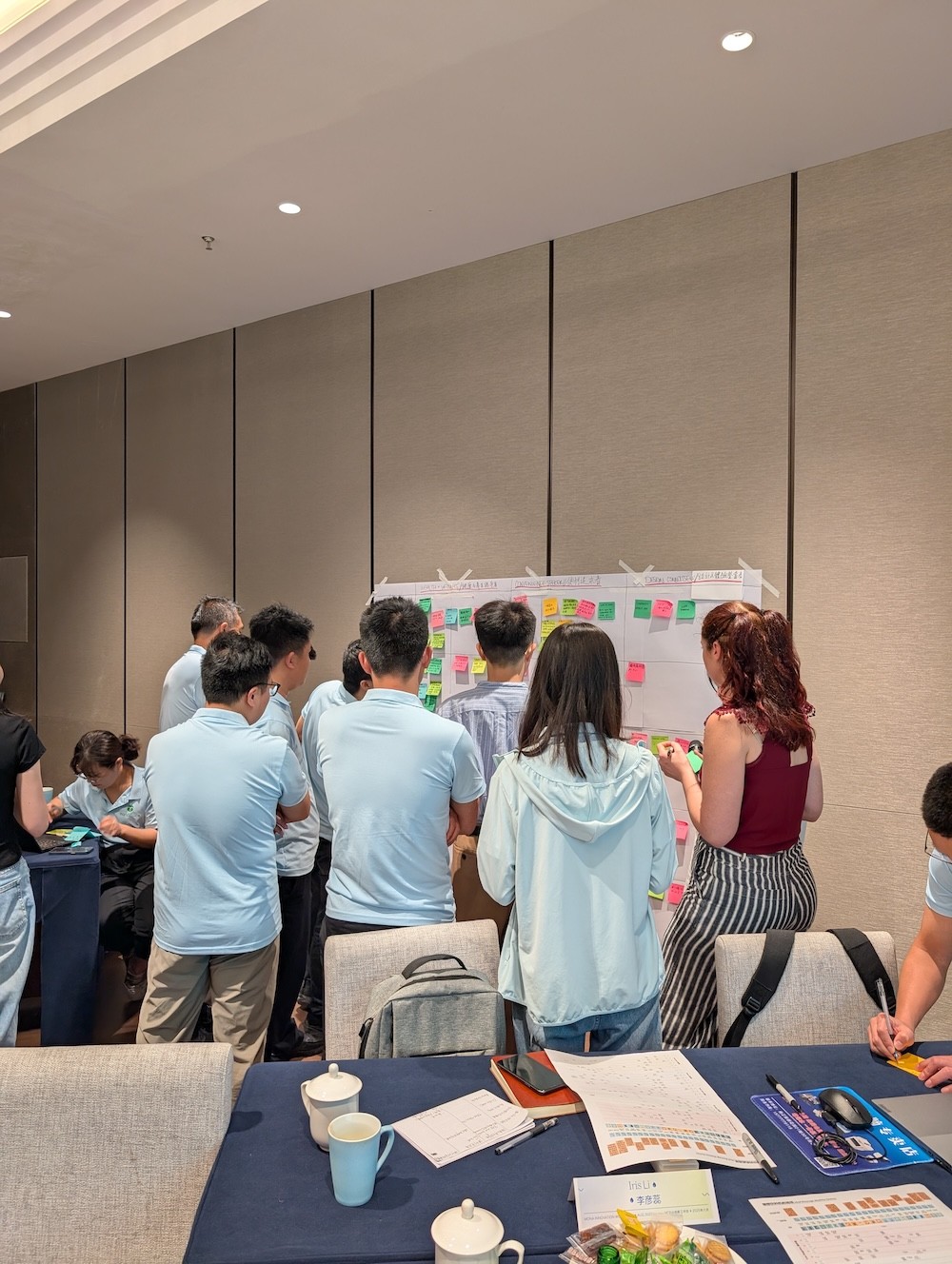
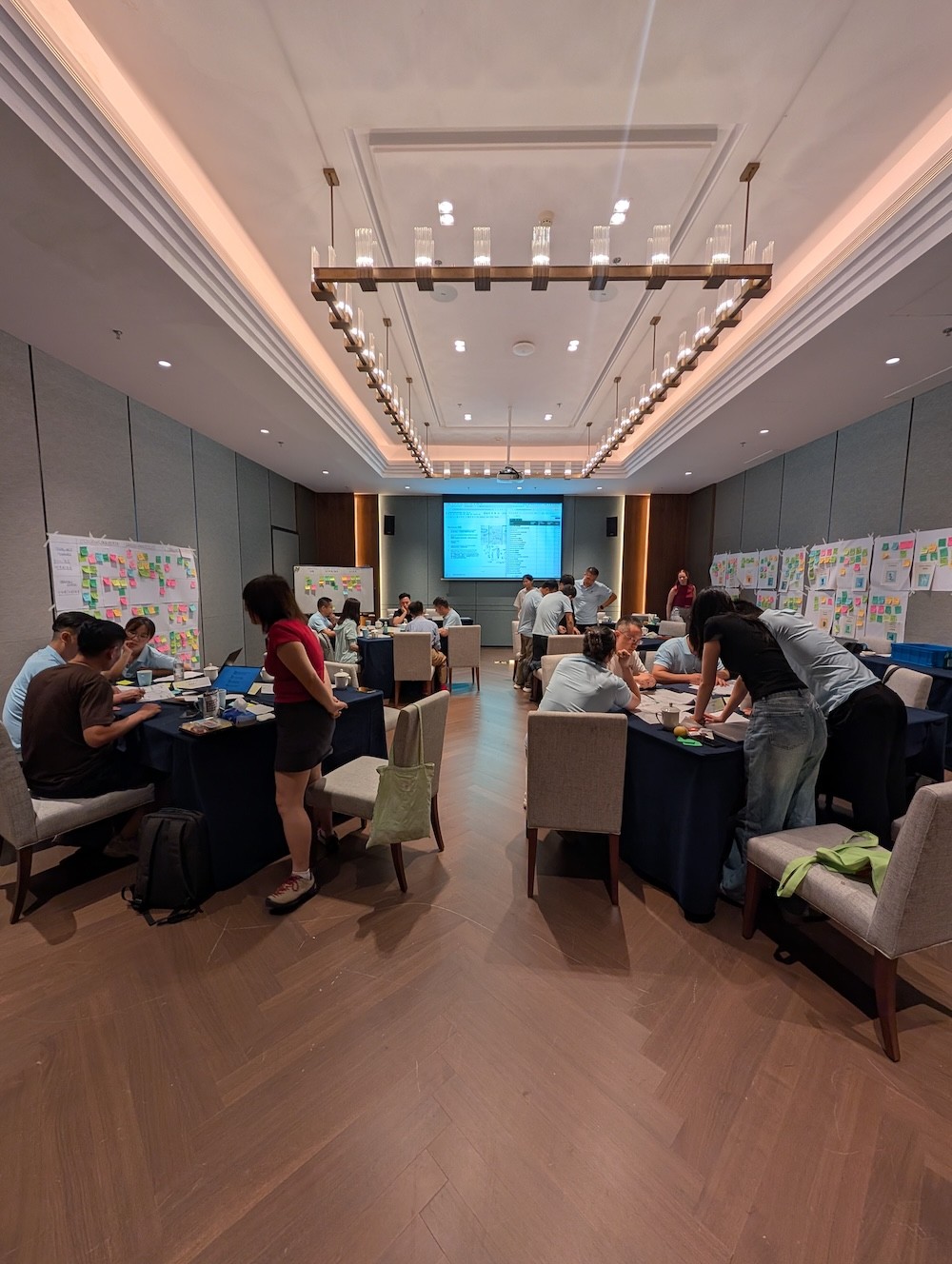
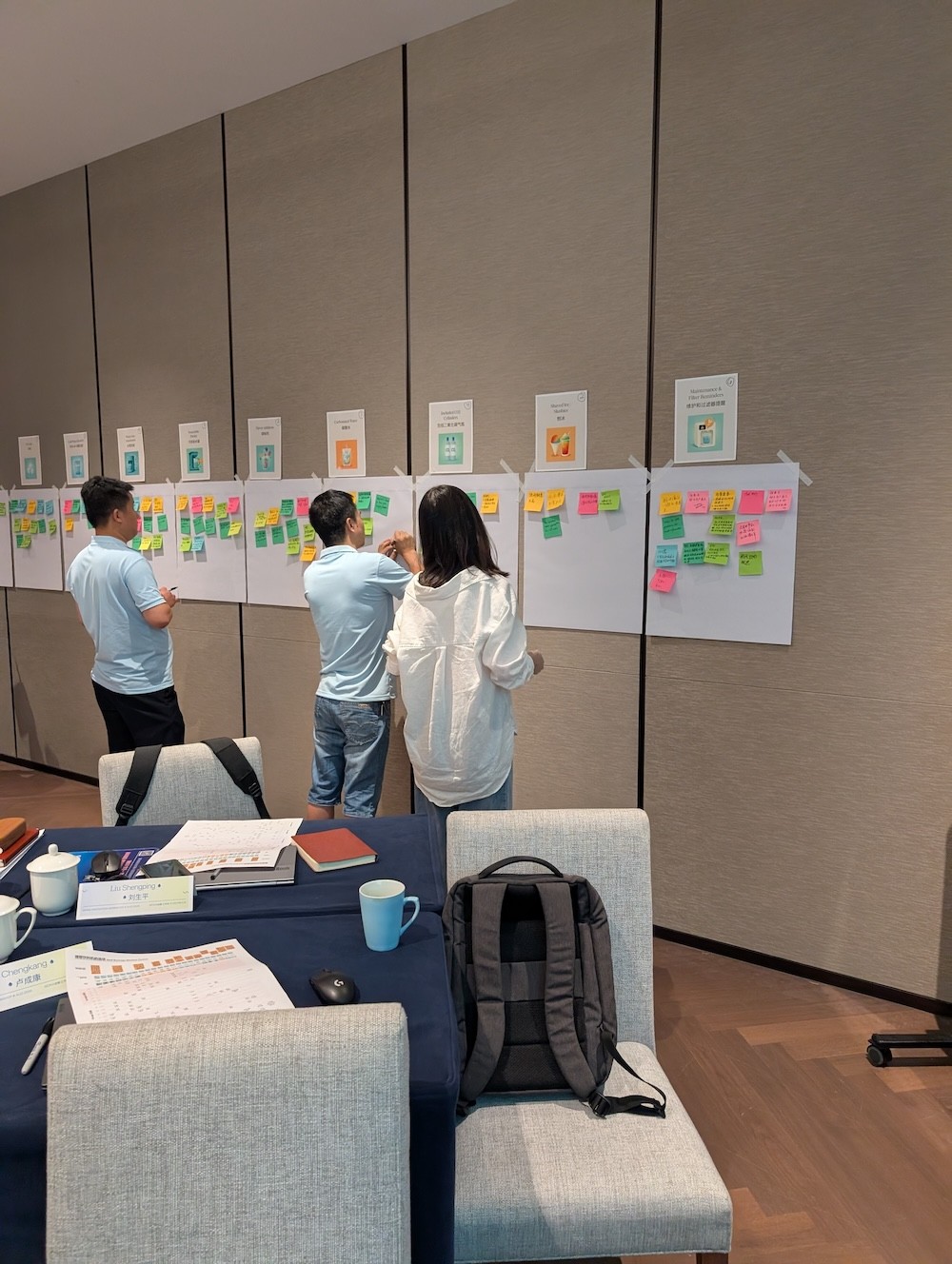
Scenes from our 20+ person innovation workshop in China with the client team
Impact
Over four months, North & Form completed a kickoff workshop, extensive quantitative and qualitative research in the US Market, and an in-person workshop with the client, resulting in:
- 60,000+ data points about water filtration, flavoring, beverage consumption, and more in the US Market
- 30+ hours of interviews in American homes
- 6 key themes around American filtration and consumption habits
- 3 personas in the US Market that fit the client’s business needs
- 152 ideas sketched — from low to medium fidelity, the client team brainstormed visual design opportunities for features and full fledge devices.
The client was able to hit the ground running with their conceptual designs, and jump into engineering and feasibility iteration. They are looking forward to a 2026 launch of their first US product to market.
Planning a U.S. product launch?
We help teams reduce guesswork with mixed-method research, clear synthesis, and product design support that turns insights into next steps.
book a discovery call

< prev
next >

U.S. Market Research for a Home Beverage Appliance
De-risking U.S. market entry with research-backed product decisions.
The Problem
An international home water appliance manufacturer had an established client base in the Chinese market, but wanted to launch a line of products into the US market. But before they could do that, they needed to understand what was important to US consumers when it came to water and filtration. Enter North & Form: US-based quantitative and qualitative research experts.
For this project we performed multiple rounds and methods of market research, in order to ensure we gave our client the best understanding of the market to ensure their success.
Kickoff Workshop
We kicked the project off with a 1.5 day in-person workshop in Austin, TX. By the end of two days, we had a list of target market segments, a focused set of research themes, and a shared definition of success for the project.
As a few members of the client company did not speak fluent English, we utilized Miro and in-person translators to overcome the language barrier.
Miro board from our kickoff workshop
Quantitative Survey
We ran a nationwide online survey (600+ respondents) to quantify beverage and water routines at scale, validate early hypotheses, and identify which questions needed deeper qualitative follow-up.
what we measured
- Current behaviors and routines (not just stated preferences)
- Trust signals and decision drivers (what builds confidence, what creates doubt)
- Friction points and tradeoffs (convenience, maintenance, space, cost)
- Feature interest mapped to context (when a feature matters, for whom, and why)
- Segment indicators to recruit for later phases
how we used it
Survey results informed recruiting criteria for the diary study and in-home visits and helped us prioritize which themes were most important to explore qualitatively.
Overview of results from the 600+ participant quantitative survey.
Diary Study
Our multi-day diary study helped us understand real beverage behavior in context, not just what people say they do. It let us capture routines over time, spot friction as it happened, and collect lightweight artifacts we could probe on during in-home visits.
how it worked
Participants completed short daily entries designed to be easy to sustain while still producing decision-useful detail. Entries captured both behavior and confidence, so we could see where habits were stable and where uncertainty showed up.
how we used it
- Identified which moments in the day were most “make or break” for an at-home solution
- Refined interview prompts and observation goals for the ethnographic phase
- Improved recruiting balance by ensuring we covered a range of routines, setups, and constraints
Participant entries from the week-long diary study
Ethnographic Research
To complement self-reported data with real-world observation, we conducted in-home ethnographic research with 30 U.S. households across every major US region. This phase focused on seeing actual setups, constraints, and decision-making in context so the team could design around reality, not assumptions.
What we did in-home
Each visit followed a consistent structure, with room to follow interesting threads:
- Context interview to understand household routines, constraints, and priorities
- Environment walkthrough to document physical setup, storage, and friction in the space
- Behavioral observation of how people actually get water and beverages throughout the day
- Guided activities such as building an ideal appliance and mood board creation to clarify tradeoffs and language
- Capture of artifacts (photos and notes on containers, filters, reminders, and workarounds) to inform design requirements
how we used it
- Validated which patterns from the survey and diary study held up in real life
- Clarified where friction was caused by the product versus the environment and routine
- Translated observations into concrete design inputs, including constraints, opportunity areas, and questions to test next
Snapshots from in-home nationwide ethnographic research
Innovation Workshop
After 4 months of research—including a 600-person quantitative study, a week-long diary study, and in-home research with 30 US households, the North & Form team traveled to China for an in-person innovation workshop with the client’s team.
The goals of this bilingual workshop at the client’s headquarters were to share the research findings and to brainstorm ideas for an innovative product the client could take to market.
By the end of 3 days, we had a feature set for the client’s first product to market in the US, concept sketches for their engineers to test and iterate on, and clear questions and assumptions to validate while moving forward.
Scenes from our 20+ person innovation workshop in China with the client team
Impact
Over four months, North & Form completed a kickoff workshop, extensive quantitative and qualitative research in the US Market, and an in-person workshop with the client, resulting in:
- 60,000+ data points about water filtration, flavoring, beverage consumption, and more in the US Market
- 30+ hours of interviews in American homes
- 6 key themes around American filtration and consumption habits
- 3 personas in the US Market that fit the client’s business needs
- 152 ideas sketched — from low to medium fidelity, the client team brainstormed visual design opportunities for features and full fledge devices.
The client was able to hit the ground running with their conceptual designs, and jump into engineering and feasibility iteration. They are looking forward to a 2026 launch of their first US product to market.
Planning a U.S. product launch?
We help teams reduce guesswork with mixed-method research, clear synthesis, and product design support that turns insights into next steps.
book a discovery call

< all projects
next project >
U.S. Market Research for a Home Beverage Appliance
De-risking U.S. market entry with research-backed product decisions.
The Problem
An international home water appliance manufacturer had an established client base in the Chinese market, but wanted to launch a line of products into the US market. But before they could do that, they needed to understand what was important to US consumers when it came to water and filtration. Enter North & Form: US-based quantitative and qualitative research experts.
For this project we performed multiple rounds and methods of market research, in order to ensure we gave our client the best understanding of the market to ensure their success.
Kickoff Workshop
We kicked the project off with a 1.5 day in-person workshop in Austin, TX. By the end of two days, we had a list of target market segments, a focused set of research themes, and a shared definition of success for the project.
As a few members of the client company did not speak fluent English, we utilized Miro and in-person translators to overcome the language barrier.
Miro board from our kickoff workshop
Quantitative Survey
We ran a nationwide online survey (600+ respondents) to quantify beverage and water routines at scale, validate early hypotheses, and identify which questions needed deeper qualitative follow-up.
what we measured
- Current behaviors and routines (not just stated preferences)
- Trust signals and decision drivers (what builds confidence, what creates doubt)
- Friction points and tradeoffs (convenience, maintenance, space, cost)
- Feature interest mapped to context (when a feature matters, for whom, and why)
- Segment indicators to recruit for later phases
how we used it
Survey results informed recruiting criteria for the diary study and in-home visits and helped us prioritize which themes were most important to explore qualitatively.
Overview of results from the 600+ participant quantitative survey.
Diary Study
Our multi-day diary study helped us understand real beverage behavior in context, not just what people say they do. It let us capture routines over time, spot friction as it happened, and collect lightweight artifacts we could probe on during in-home visits.
how it worked
Participants completed short daily entries designed to be easy to sustain while still producing decision-useful detail. Entries captured both behavior and confidence, so we could see where habits were stable and where uncertainty showed up.
how we used it
- Identified which moments in the day were most “make or break” for an at-home solution
- Refined interview prompts and observation goals for the ethnographic phase
- Improved recruiting balance by ensuring we covered a range of routines, setups, and constraints
Participant entries from the week-long diary study
Ethnographic Research
To complement self-reported data with real-world observation, we conducted in-home ethnographic research with 30 U.S. households across every major US region. This phase focused on seeing actual setups, constraints, and decision-making in context so the team could design around reality, not assumptions.
What we did in-home
Each visit followed a consistent structure, with room to follow interesting threads:
- Context interview to understand household routines, constraints, and priorities
- Environment walkthrough to document physical setup, storage, and friction in the space
- Behavioral observation of how people actually get water and beverages throughout the day
- Guided activities such as building an ideal appliance and mood board creation to clarify tradeoffs and language
- Capture of artifacts (photos and notes on containers, filters, reminders, and workarounds) to inform design requirements
how we used it
- Validated which patterns from the survey and diary study held up in real life
- Clarified where friction was caused by the product versus the environment and routine
- Translated observations into concrete design inputs, including constraints, opportunity areas, and questions to test next
Snapshots from in-home nationwide ethnographic research
Innovation Workshop
After 4 months of research—including a 600-person quantitative study, a week-long diary study, and in-home research with 30 US households, the North & Form team traveled to China for an in-person innovation workshop with the client’s team.
The goals of this bilingual workshop at the client’s headquarters were to share the research findings and to brainstorm ideas for an innovative product the client could take to market.
By the end of 3 days, we had a feature set for the client’s first product to market in the US, concept sketches for their engineers to test and iterate on, and clear questions and assumptions to validate while moving forward.
Scenes from our 20+ person innovation workshop in China with the client team
Impact
Over four months, North & Form completed a kickoff workshop, extensive quantitative and qualitative research in the US Market, and an in-person workshop with the client, resulting in:
- 60,000+ data points about water filtration, flavoring, beverage consumption, and more in the US Market
- 30+ hours of interviews in American homes
- 6 key themes around American filtration and consumption habits
- 3 personas in the US Market that fit the client’s business needs
- 152 ideas sketched — from low to medium fidelity, the client team brainstormed visual design opportunities for features and full fledge devices.
The client was able to hit the ground running with their conceptual designs, and jump into engineering and feasibility iteration. They are looking forward to a 2026 launch of their first US product to market.
Planning a U.S. product launch?
We help teams reduce guesswork with mixed-method research, clear synthesis, and product design support that turns insights into next steps.
book a discovery call
